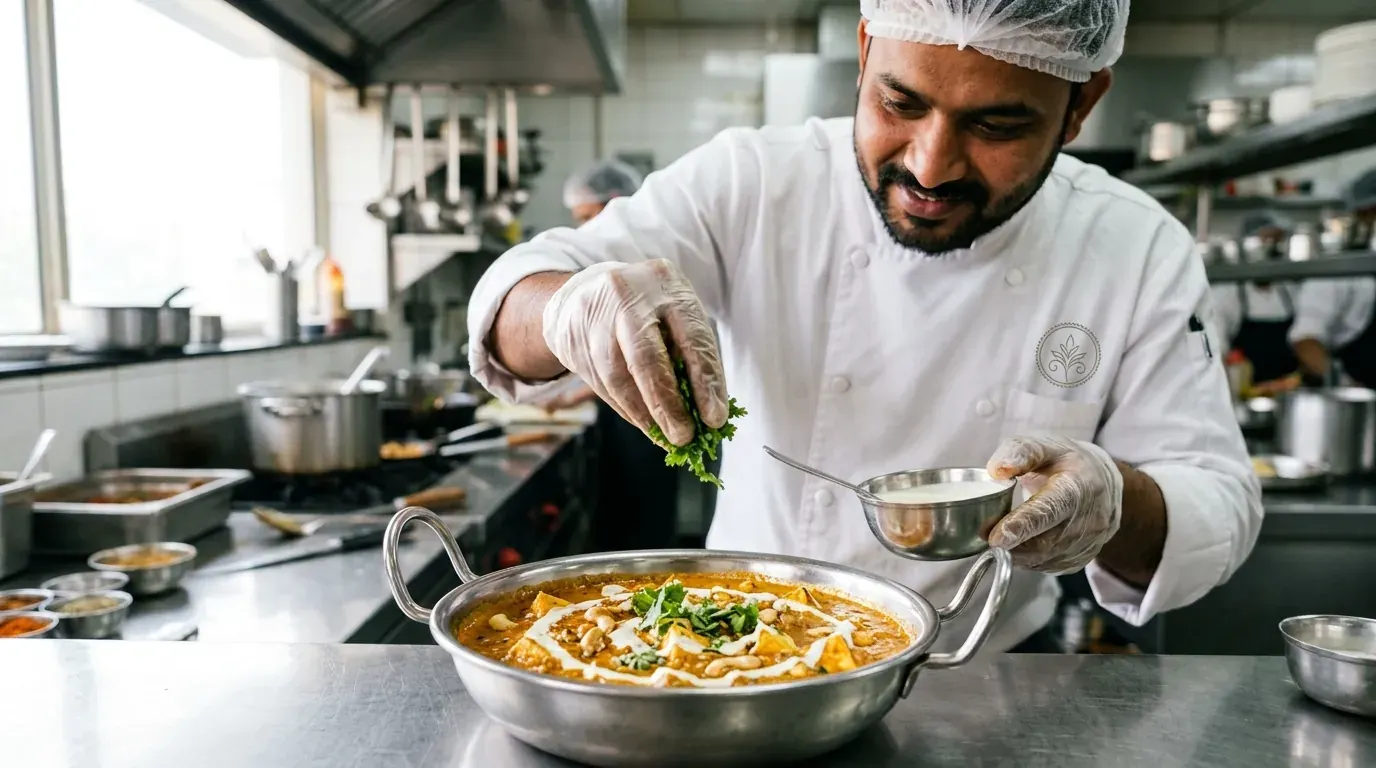
शाही पनीर
Shahi paneer in bulk for weddings and parties
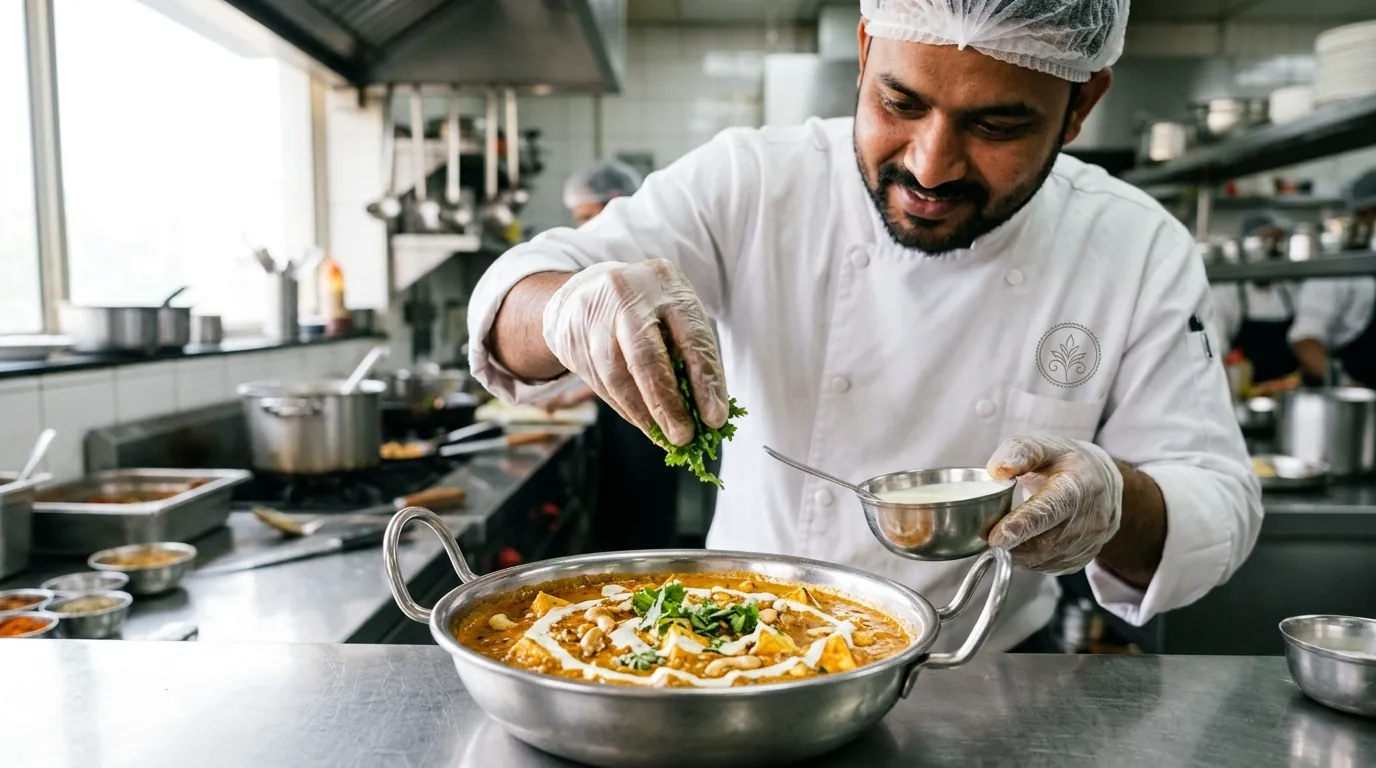
Shahi paneer is the richer, more festive paneer dish that shows up at weddings rather than everyday meals. Soft paneer cubes sit in a smooth, mildly sweet, cashew-based gravy.
What makes a good shahi paneer
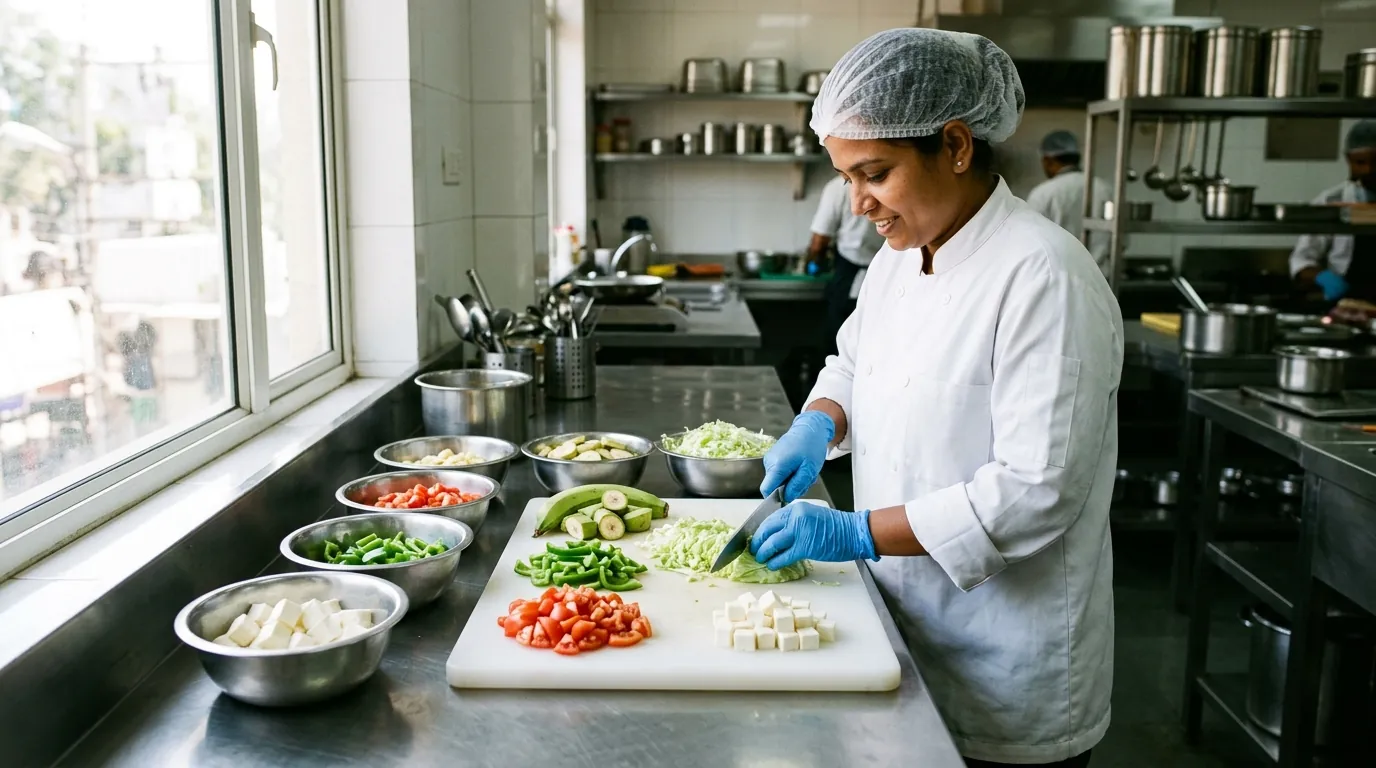
Shahi paneer is made by preparing a smooth gravy from onions, tomatoes and a cashew or khoya paste, cooked with mild spices and finished with cream, into which soft paneer cubes are added just before serving. The gravy is meant to be smooth, not chunky, and only lightly spiced so the paneer and cream flavour stand out. A good shahi paneer should have a silky gravy and soft, fresh paneer that has not turned rubbery from overcooking.
Where families order it
- Wedding dinner buffet
- Sangeet and reception menus
- Family celebration dinners
- Corporate dinner events
How much shahi paneer for your guests?
A rough planning figure for a menu with other dishes beside it. Baljeet sets the real amount once your menu is fixed.
Kitchen slip · Shahi Paneer
| 50 guests | about 6 kg |
|---|---|
| 100 guests | about 11 kg |
| 250 guests | about 25 kg |
| 500 guests | about 48 kg |
Approximate, cooked weight or pieces, no safety margin.
Ordered for weddings and events in Panchkula, Chandigarh, Mohali, Zirakpur and Kharar. Planning the whole menu? Try the food quantity calculator.
How is shahi paneer served at a wedding?
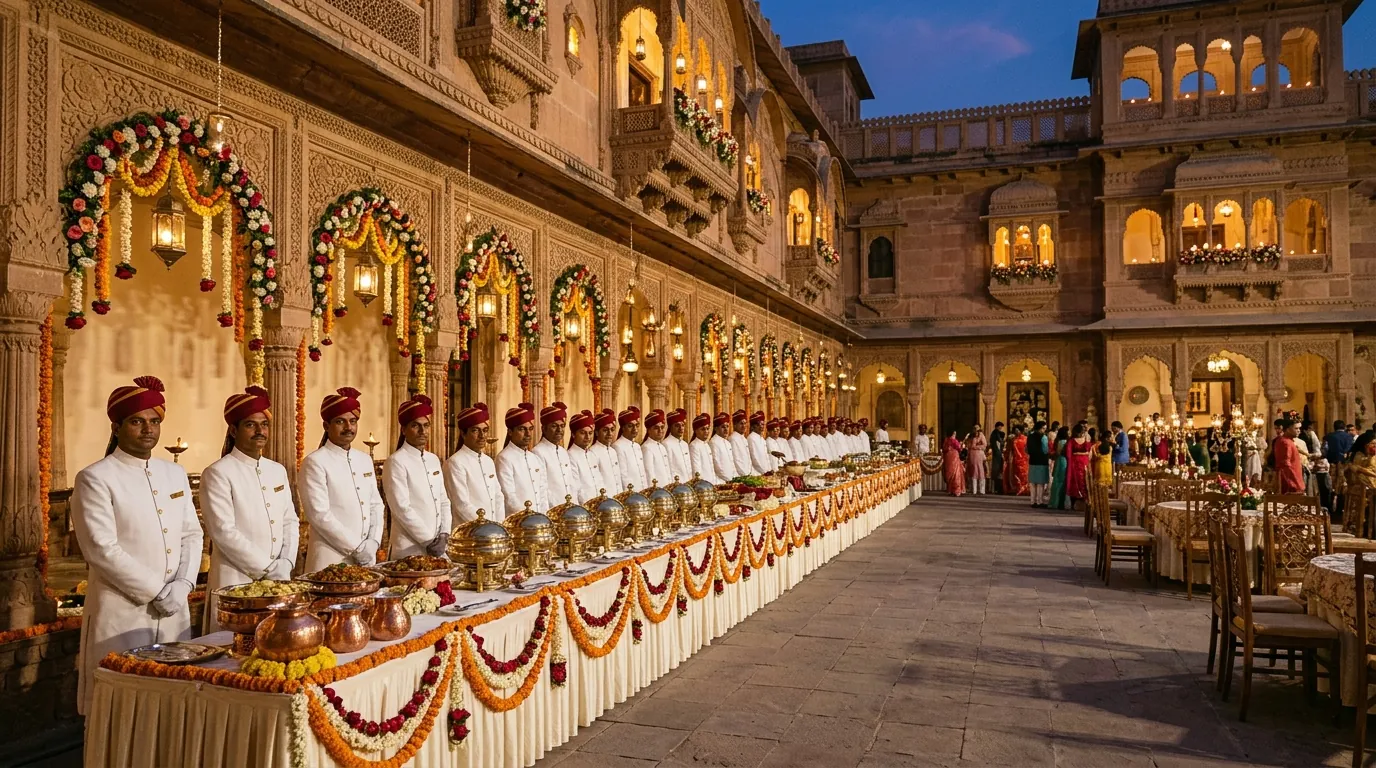
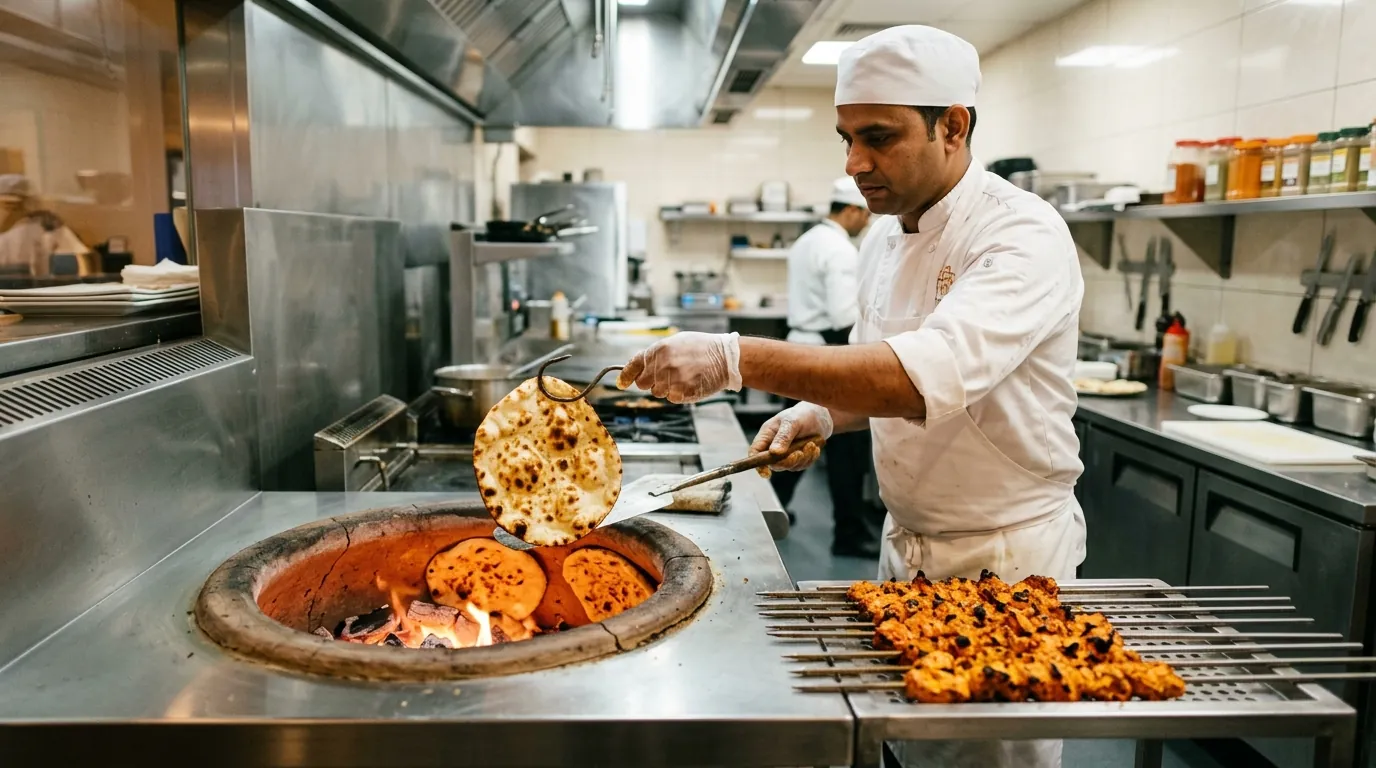
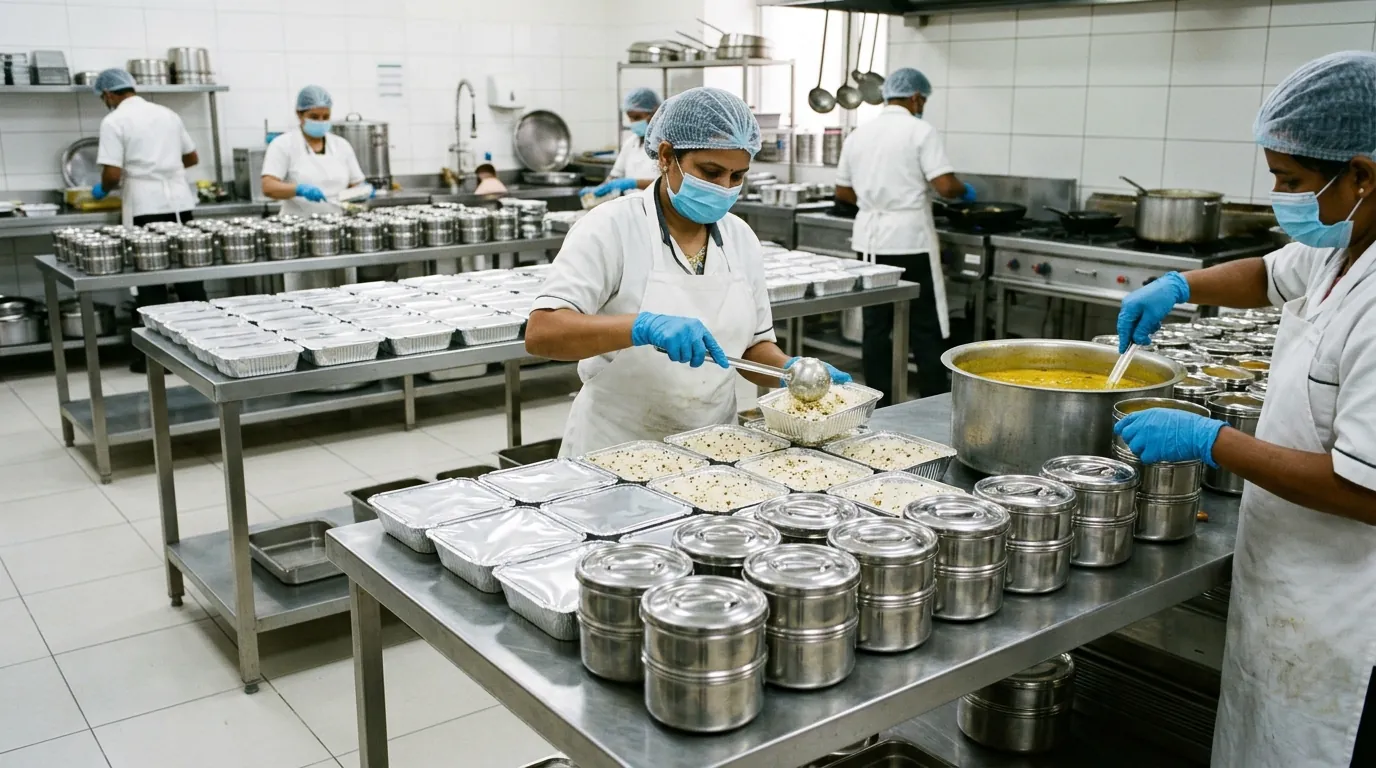
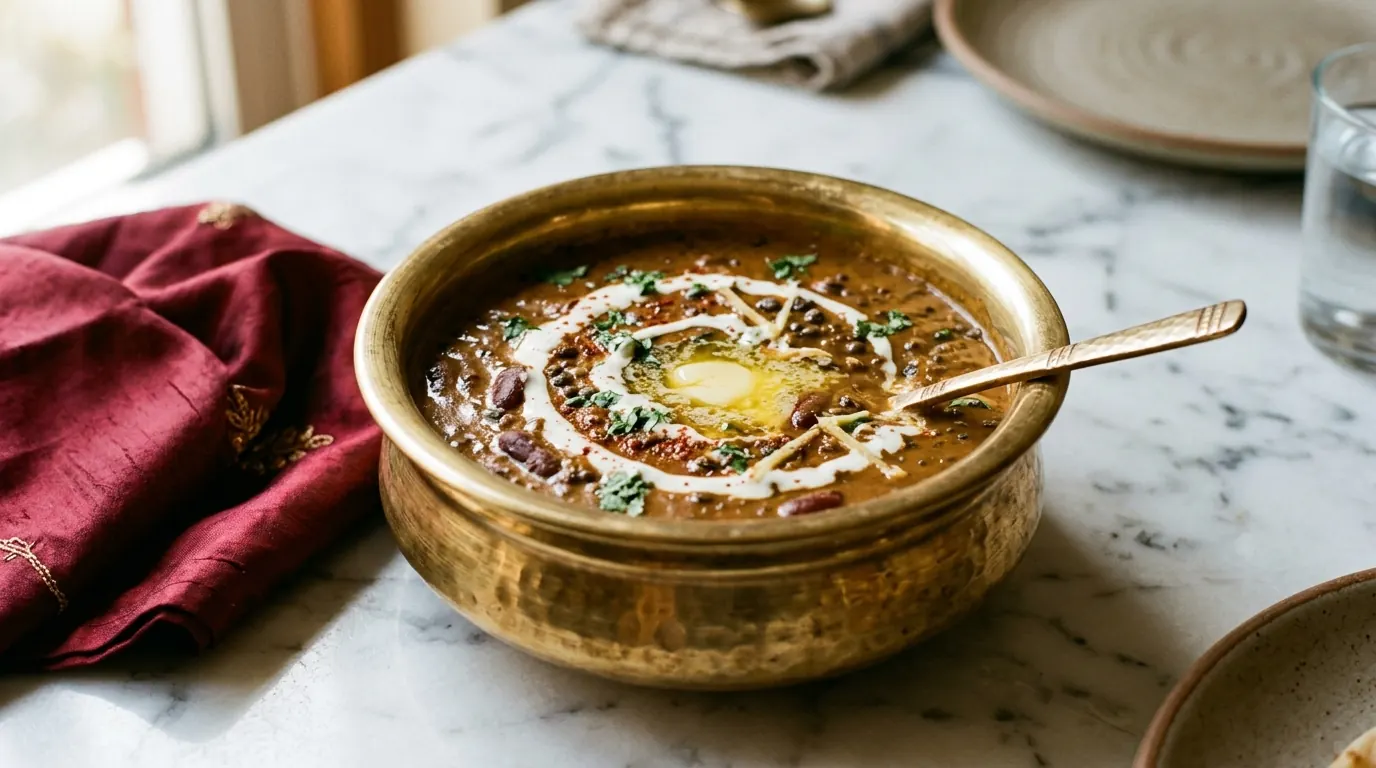
Shahi paneer is served hot from the buffet counter, kept in a chafing dish alongside dal makhani and rice so guests can serve themselves through the dinner hours. Paneer cubes are typically added closer to serving time rather than sitting in the gravy too long, to keep them soft rather than rubbery. It is common on sangeet and reception menus as the main vegetarian centrepiece dish. Hosts usually avoid pairing it with a second heavy paneer preparation, choosing a lighter lentil or vegetable dish alongside it instead.
Where does shahi paneer come from?
Shahi paneer, meaning royal paneer, developed in Mughal-influenced North Indian kitchens where cashew and khoya-based gravies signalled a richer, more festive style of cooking compared to everyday tomato-onion curries. It became a common wedding and celebration dish in Punjab because paneer itself was seen as a premium ingredient, and the smooth, mildly sweet gravy suited large-scale buffet service well since it holds its texture over time. It remains one of the standard vegetarian centrepiece dishes on North Indian wedding menus today.
How it keeps
Best served fresh and hot on the day; leftover gravy can be refrigerated for a day but paneer texture is at its best when served soon after cooking.
Don’t worry, we will take care of you
Shahi paneer costs more than a simple paneer sabzi because of the cashews and cream, so pairing it with a lighter lentil dish instead of a second rich paneer preparation keeps the menu balanced.
Tell us your budget →Shahi Paneer: what people ask
How is shahi paneer different from plain paneer sabzi?
Shahi paneer uses a cashew or khoya-based gravy that is richer and smoother, while everyday paneer sabzi is usually a simpler tomato and onion base without the extra cream and nuts.
How much shahi paneer is needed for a wedding of 250 guests?
Roughly 25 kg is a reasonable planning figure when served alongside dal, rice and bread. Baljeet confirms the exact amount once he knows your full menu.
Can shahi paneer be made Jain-friendly?
The gravy typically uses onions, which would need to be left out for a Jain version. Ask Baljeet about a Jain-style paneer preparation as an alternative.
Why does shahi paneer cost more than regular paneer sabzi?
The cashew or khoya used to make the gravy smooth and rich costs more than the simple onion-tomato base used in everyday paneer sabzi, which is the main reason for the price difference.
Can paneer be added fresh just before serving?
Yes, and it generally should be, since paneer left sitting too long in hot gravy can turn slightly rubbery over time. Adding it closer to serving time keeps it soft and fresh for guests.
Don’t worry, we will take care of you
Tell us how many guests you have and how much you can spend. Baljeet plans a full, proper menu around that amount. He says plainly what it covers, with no hidden extras, whether it’s a 40-guest path at home or a 600-guest wedding.