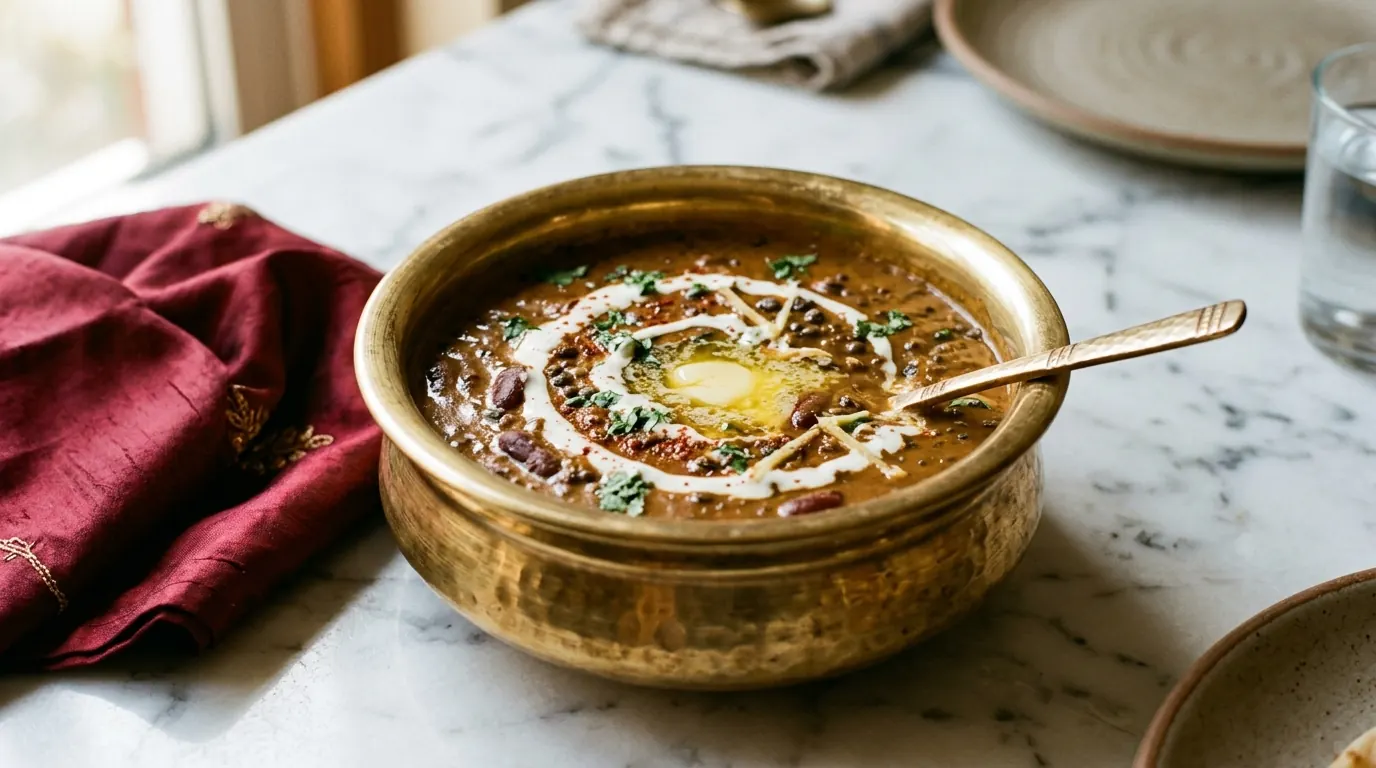
दाल मखनी
Dal makhani in bulk for weddings and parties
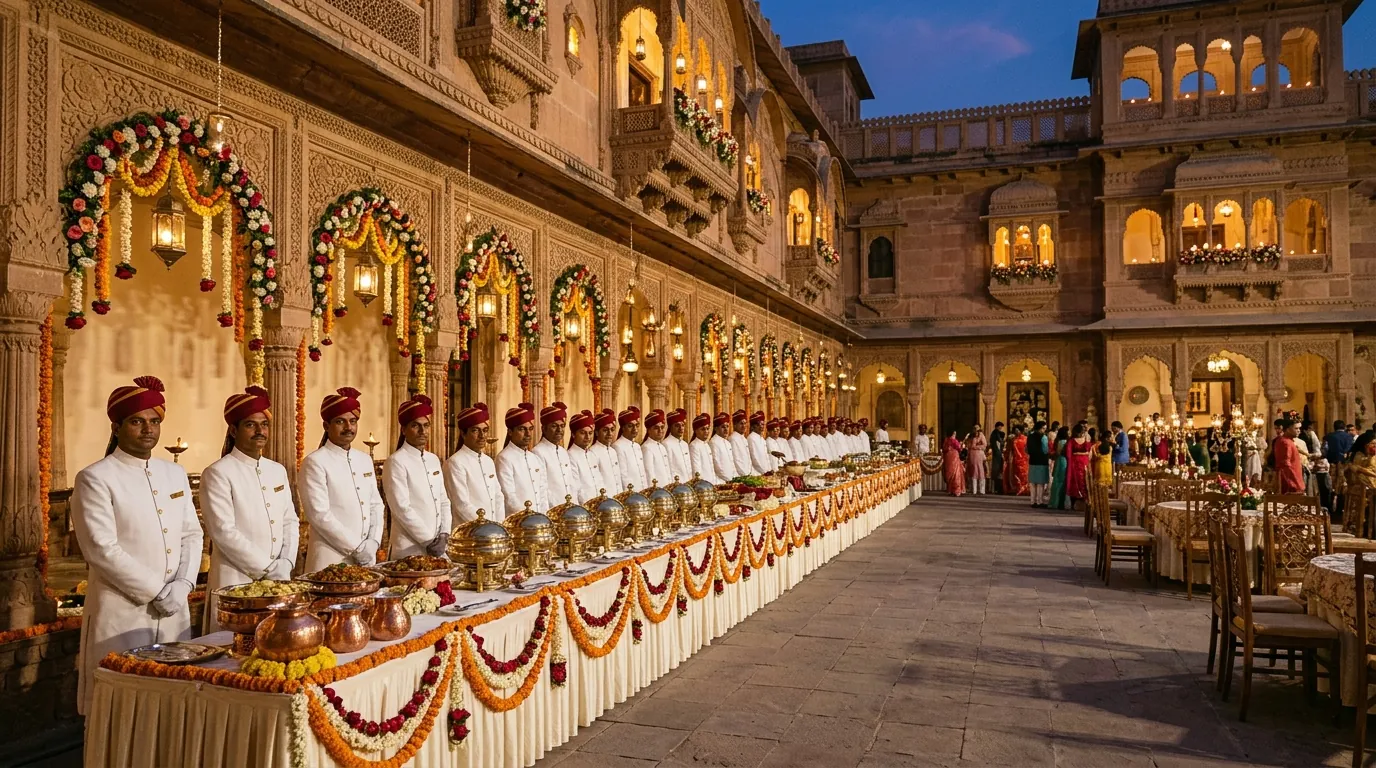
Dal makhani is the one dish almost every Punjabi wedding menu includes without question. Its dark, creamy texture comes from long, slow cooking, not shortcuts.
What makes a good dal makhani
Dal makhani is made by soaking whole black lentils and a small amount of kidney beans overnight, then slow-cooking them for hours with tomatoes, ginger, garlic and spices until soft, finishing with cream and butter for richness. The long cooking time is what gives it a deep flavour and dark colour, rushing it leaves the lentils undercooked and the taste thin. A good dal makhani should be thick, smooth, and taste rounded rather than sharply spicy or overly buttery.
Where families order it
- Wedding dinner buffet
- Corporate lunch events
- Family get-togethers
- Reception dinners
How much dal makhani for your guests?
A rough planning figure for a menu with other dishes beside it. Baljeet sets the real amount once your menu is fixed.
Kitchen slip · Dal Makhani
| 50 guests | about 6 kg |
|---|---|
| 100 guests | about 11 kg |
| 250 guests | about 25 kg |
| 500 guests | about 48 kg |
Approximate, cooked weight or pieces, no safety margin.
Ordered for weddings and events in Panchkula, Chandigarh, Mohali, Zirakpur and Kharar. Planning the whole menu? Try the food quantity calculator.
How is dal makhani served at a wedding?
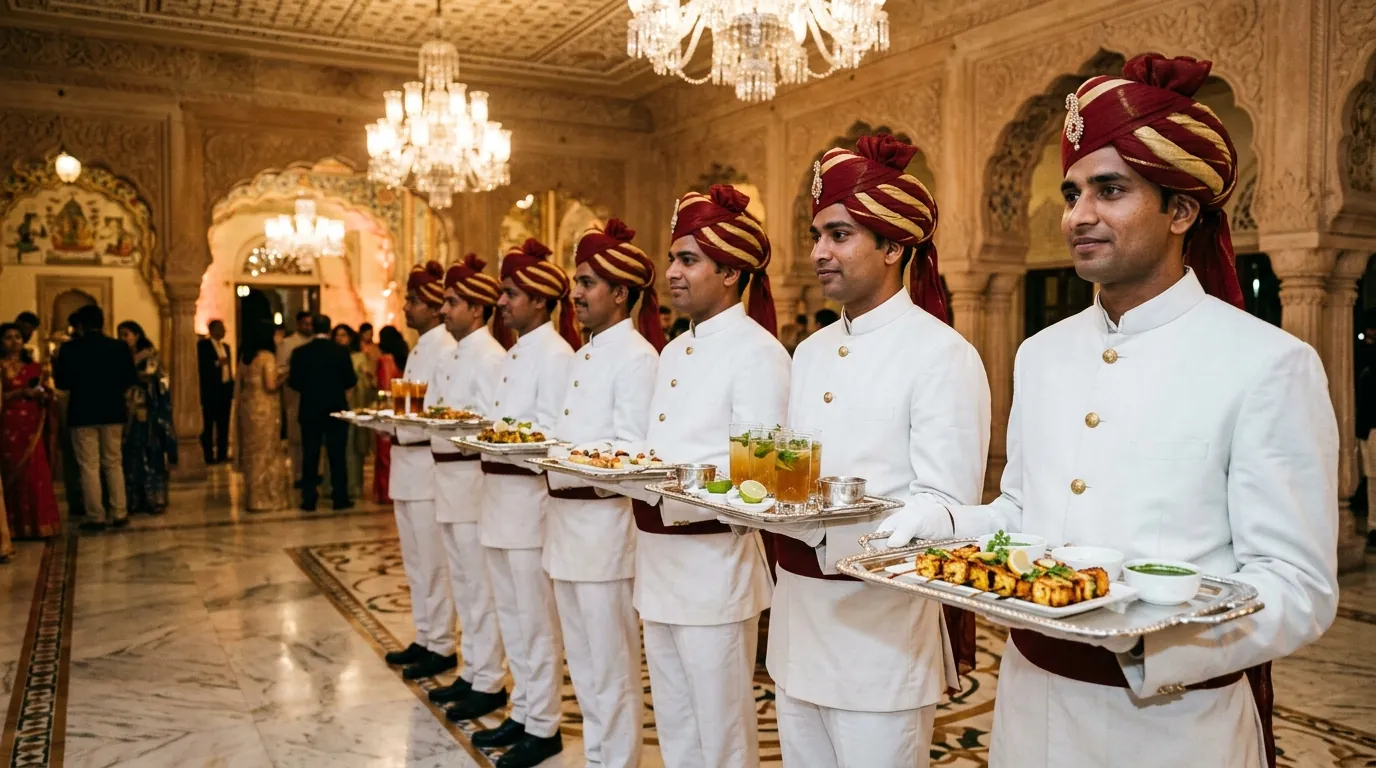
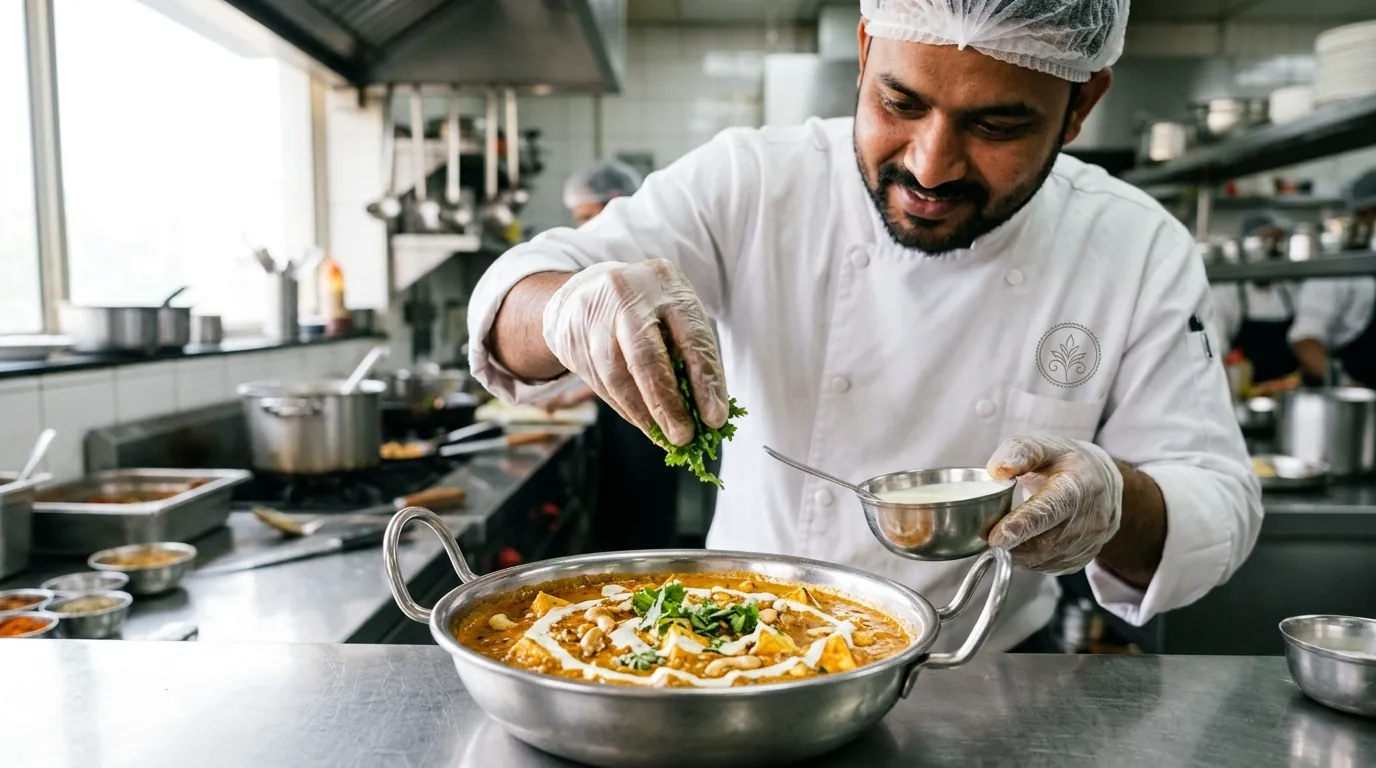
Dal makhani is served hot from the buffet line, kept warm in large chafing dishes or handis throughout the dinner service rather than plated individually in advance. It is typically placed early in the buffet sequence alongside shahi paneer and rice, since guests build their plate around it as the main lentil dish. Garnish is usually a swirl of cream or a small piece of butter on top just before serving. Families generally order it alongside one other main course rather than two competing rich dishes.
Where does dal makhani come from?
Dal makhani was developed in undivided Punjab, credited to cooks who slow-cooked whole black lentils overnight over embers and finished them with butter and cream. It became a defining dish of Punjabi restaurant and wedding cuisine through the mid-20th century as tandoor-style cooking spread across North India. Today it is considered close to essential on any Punjabi wedding menu, often the dish by which guests judge the quality of the vegetarian spread on offer.
How it keeps
Best served fresh and hot; if kept, it should be refrigerated and used within a day, then reheated well before serving again.
Don’t worry, we will take care of you
Dal makhani is naturally filling, so it can be planned as the main protein-rich dish with lighter sabzis alongside, rather than adding a second heavy paneer dish, to manage cost.
Tell us your budget →Dal Makhani: what people ask
How much dal makhani is needed for 100 guests?
Around 11 kg is a common planning figure for 100 guests when it is served with rice, bread and one or two other dishes. Baljeet confirms the exact amount for your full menu.
Can dal makhani be made without garlic for Jain guests?
The classic recipe uses garlic and ginger for flavour, so a Jain version needs adjustment. Baljeet can discuss a Jain-friendly dal option separately.
Why does dal makhani taste different at different caterers?
The main difference usually comes from cooking time and the cream-to-butter ratio used to finish it. Slow cooking overnight or for several hours gives it the deeper, restaurant-style taste.
How is dal makhani kept hot through a long wedding dinner?
It is usually kept in chafing dishes or on low flame handis at the buffet counter, stirred occasionally, so it stays hot and does not separate through several hours of serving.
Is dal makhani the same at every wedding caterer?
No, the taste can vary noticeably based on cooking time and the cream-to-butter ratio used. Slow overnight cooking generally gives a deeper, more restaurant-style flavour than a quickly made version.
Goes well with
Don’t worry, we will take care of you
Tell us how many guests you have and how much you can spend. Baljeet plans a full, proper menu around that amount. He says plainly what it covers, with no hidden extras, whether it’s a 40-guest path at home or a 600-guest wedding.