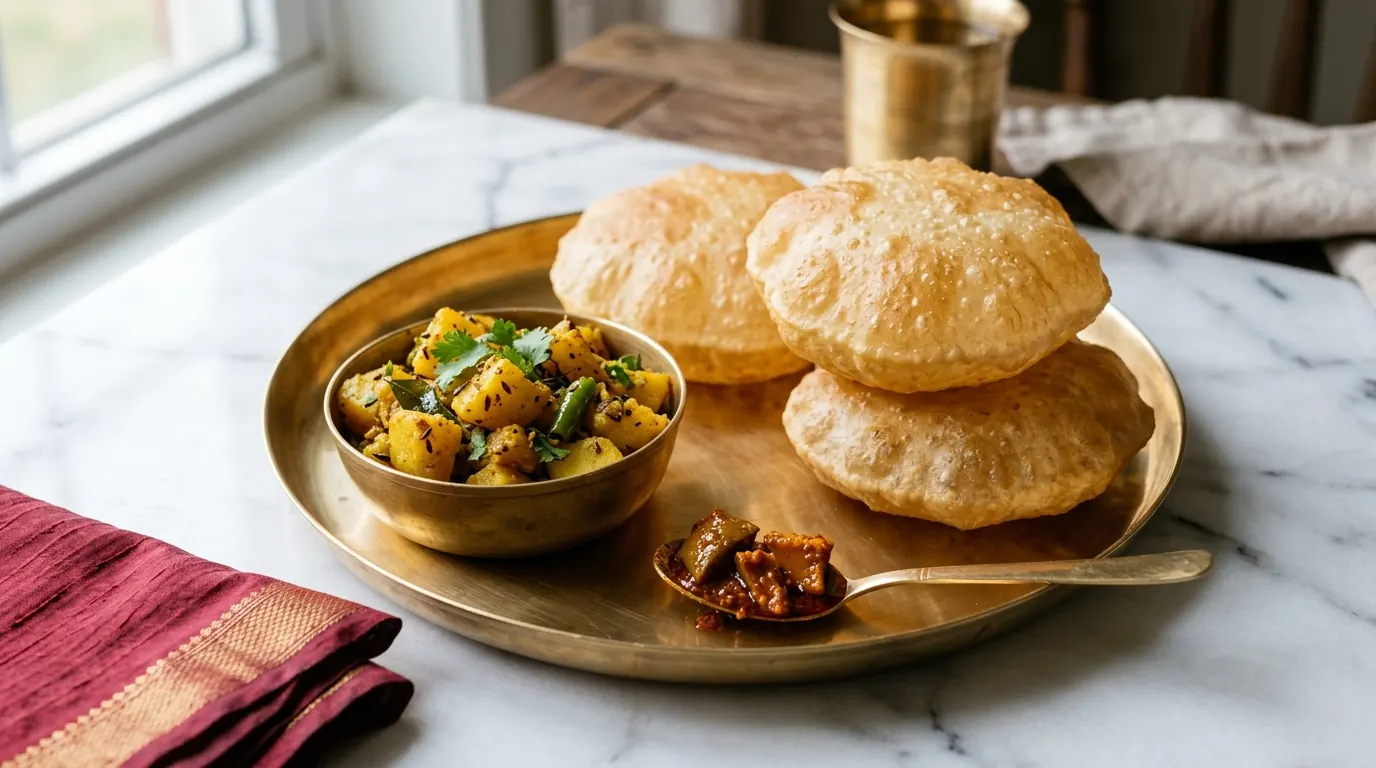
पूरी आलू भाजी
Puri aloo bhaji in bulk for events and bhandaras
Puri aloo bhaji is the simple, familiar combination that shows up at everything from morning baraat breakfasts to community langars. It is easy to eat and rarely leaves anyone hungry.
What makes a good puri aloo bhaji
Puri is made from a stiff wheat flour dough, rolled into small discs and deep fried quickly on high heat so they puff up light and hollow, while aloo bhaji is made by cooking boiled, mashed or diced potatoes with a light tempering of mustard seeds, curry leaves and mild spices. Puris must be fried fresh, they lose their puff and turn soft if made too far ahead. A good plate should have hot, well-puffed puris with a soft, mildly spiced potato bhaji, not overly dry or watery.
Where families order it
- Baraat morning breakfast
- Langar and bhandara meals
- Kanjak and pooja prasad
- Family functions
How much puri aloo bhaji for your guests?
A rough planning figure for a menu with other dishes beside it. Baljeet sets the real amount once your menu is fixed.
Kitchen slip · Puri Aloo Bhaji
| 50 guests | about 150 puris with 6 kg bhaji |
|---|---|
| 100 guests | about 300 puris with 11 kg bhaji |
| 250 guests | about 700 puris with 25 kg bhaji |
| 500 guests | about 1400 puris with 48 kg bhaji |
Approximate, cooked weight or pieces, no safety margin.
Ordered for weddings and events in Panchkula, Chandigarh, Mohali, Zirakpur and Kharar. Planning the whole menu? Try the food quantity calculator.
How is puri aloo bhaji served at a wedding?
Puri aloo bhaji is served hot, with puris fried fresh in small batches and handed to guests immediately while aloo bhaji is kept warm in a large pot nearby. It commonly appears at baraat morning breakfast counters and gurudwara langars, served either as a plated combination or in simple thalis for larger community meals. For kanjak and pooja prasad, a smaller portion is placed on individual plates for each child. Because puris deflate quickly once fried, this dish needs continuous fresh frying rather than a pre-made batch sitting out.
Where does puri aloo bhaji come from?
Puri aloo bhaji is a simple, widespread North Indian combination with no single point of origin, found in home kitchens, roadside stalls and temple prasad across the region for generations. In Punjab it became closely tied to baraat morning breakfasts and gurudwara langars because both puri and aloo bhaji are quick to prepare in bulk and need no elaborate spicing. Its association with kanjak and pooja prasad also comes from its simplicity, since prasad dishes are traditionally kept plain rather than heavily seasoned.
How it keeps
Bhaji keeps refrigerated for a day and reheats fine; puris must be fried fresh close to serving time since they turn soft and lose their puff quickly.
Don’t worry, we will take care of you
Puri aloo bhaji is one of the most economical bulk breakfast options, useful for large gatherings like langars where feeding more people within budget matters.
Tell us your budget →Puri Aloo Bhaji: what people ask
Can puri aloo bhaji be served for a large langar?
Yes, it is a common and practical choice for langars and bhandaras since it is filling, simple to serve at scale, and generally budget-friendly.
How many puris per guest should be planned?
About 3 puris per guest is a typical planning number for a breakfast or prasad-style meal. Baljeet confirms the exact count for your event.
Can puri aloo bhaji be made Jain-friendly?
Since aloo bhaji is potato-based, a strict Jain version that avoids root vegetables would need a different vegetable base. Discuss this with Baljeet for a Jain alternative.
Why do puris need to be fried close to serving time?
Puris lose their puffed-up shape and turn soft within a short time after frying, becoming chewy rather than light. So they are best made fresh in small batches right before guests are actually served.
Is puri aloo bhaji a common langar dish?
Yes, it is one of the most common langar and bhandara meals since both puri and aloo bhaji can be prepared quickly in bulk without needing elaborate spices or ingredients.
Goes well with
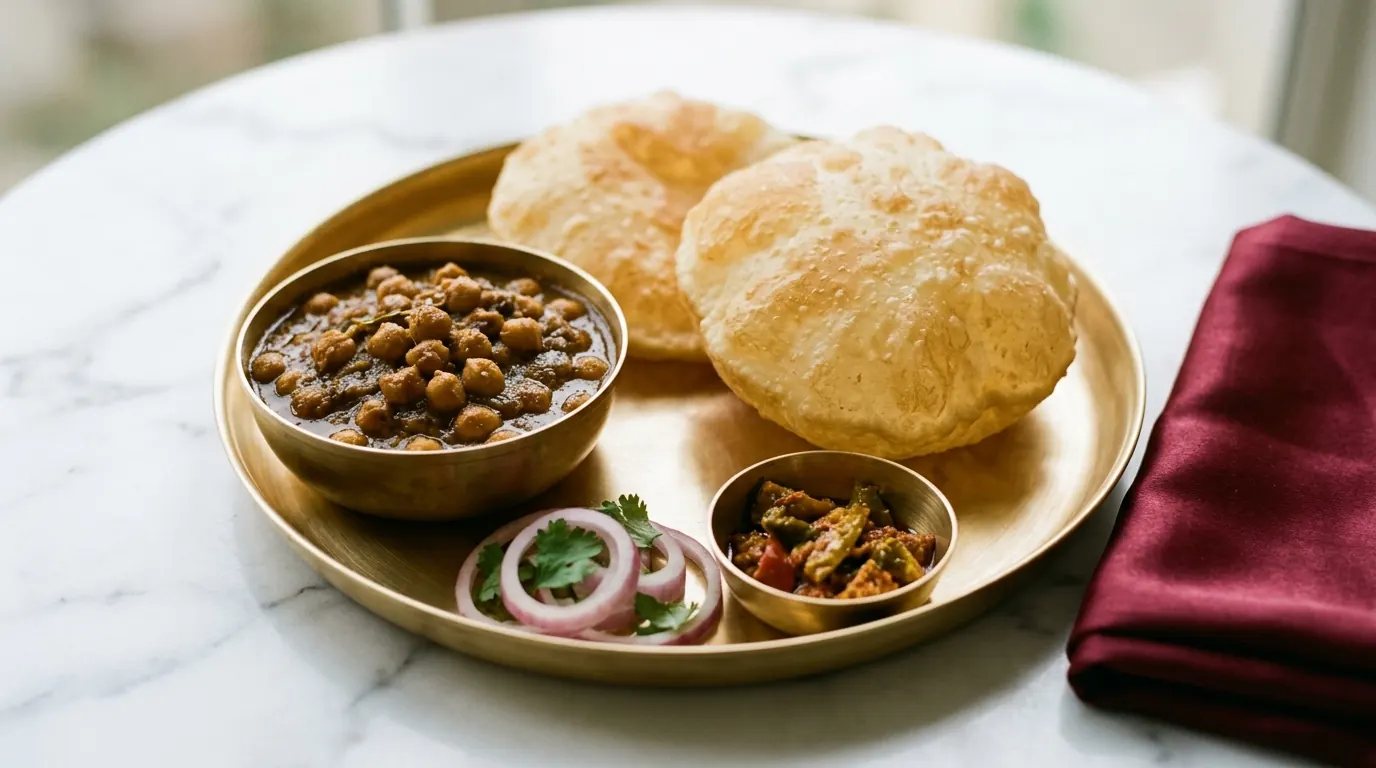
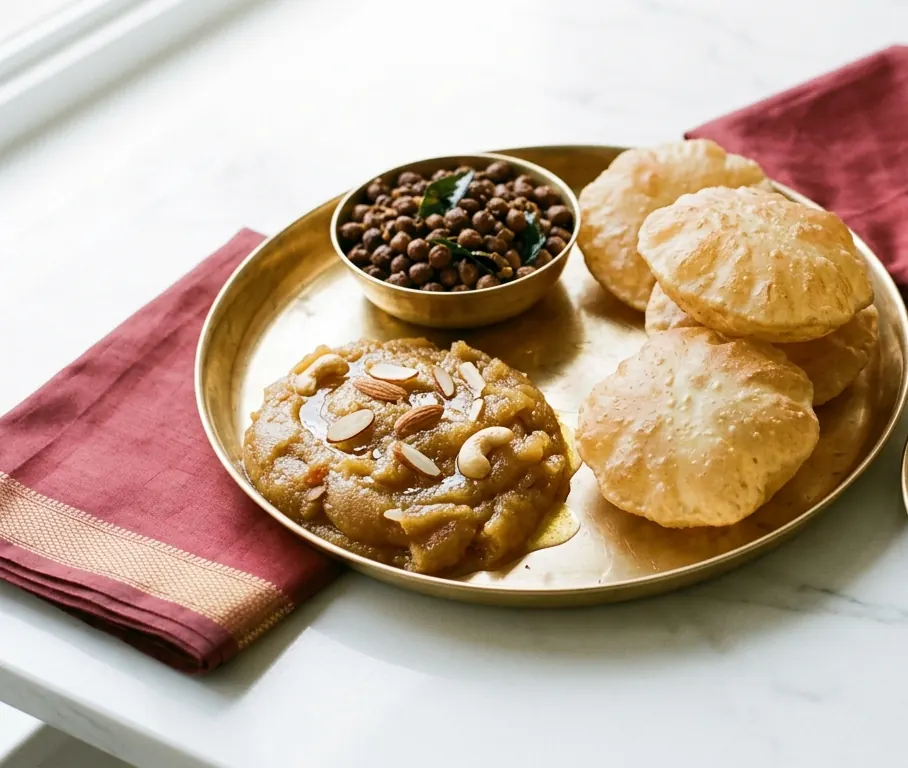
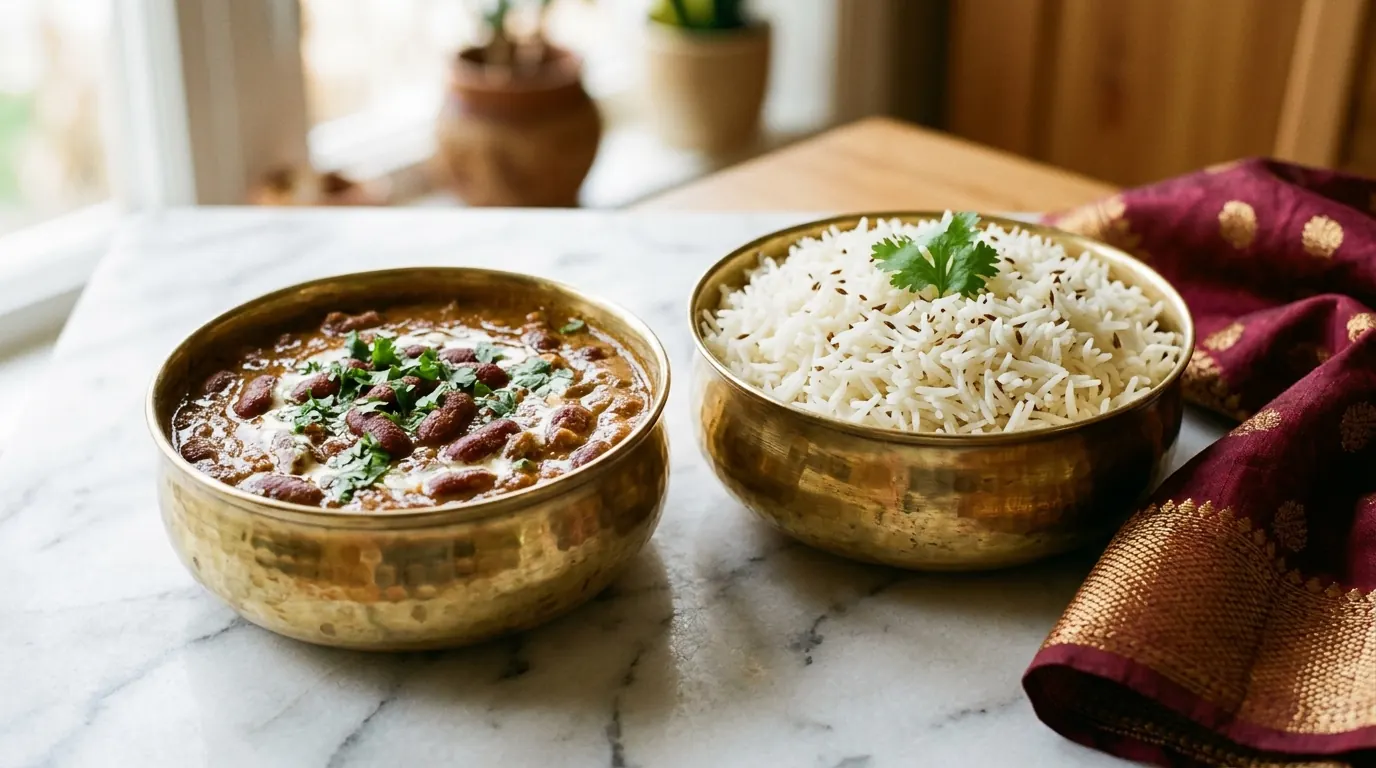
Don’t worry, we will take care of you
Tell us how many guests you have and how much you can spend. Baljeet plans a full, proper menu around that amount. He says plainly what it covers, with no hidden extras, whether it’s a 40-guest path at home or a 600-guest wedding.