बालूशाही
Balushahi in bulk for weddings and festivals
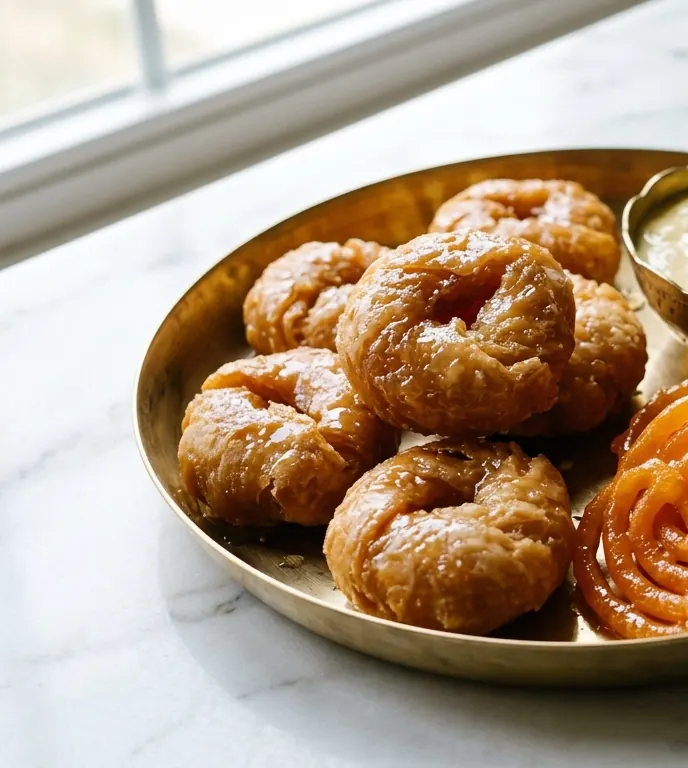
Balushahi is the flaky, slightly crisp sweet that many people compare to a doughnut, except it is glazed in sugar syrup instead of icing. It adds a nice change of texture to a sweet tray.
What makes a good balushahi
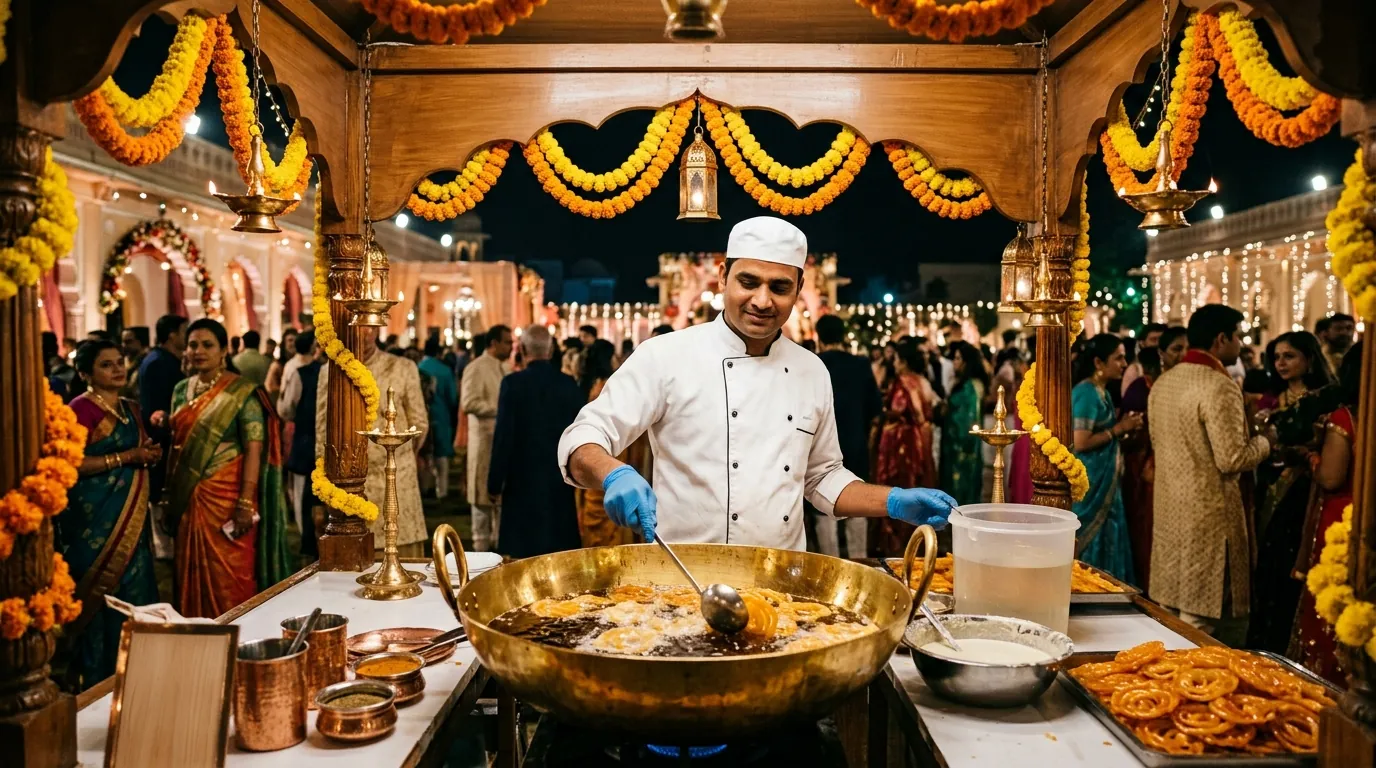
Balushahi is made from a stiff flour and ghee dough, shaped into thick discs with a dimple pressed in the centre, then deep fried slowly on a low flame so the inside cooks through and flakes form, before dipping the fried discs in sugar syrup. Frying too fast leaves a raw centre, which is the most common mistake. A good balushahi should be flaky and slightly crisp on the outside, soft inside, with a light sugar glaze rather than a thick, wet coating.
Where families order it
- Wedding sweet trays
- Diwali and festival gifting
- Karva Chauth and puja platters
- Everyday sweet boxes
How much balushahi for your guests?
A rough planning figure for a menu with other dishes beside it. Baljeet sets the real amount once your menu is fixed.
Kitchen slip · Balushahi
| 50 guests | about 4 kg |
|---|---|
| 100 guests | about 7 kg |
| 250 guests | about 16 kg |
| 500 guests | about 30 kg |
Approximate, cooked weight or pieces, no safety margin.
Ordered for weddings and events in Panchkula, Chandigarh, Mohali, Zirakpur and Kharar. Planning the whole menu? Try the food quantity calculator.
How is balushahi served at a wedding?
Balushahi is served at room temperature, placed on a mixed sweet tray or packed into festival gift boxes rather than served warm or chilled. It adds a different, flakier texture next to smoother sweets like barfi or kaju katli, which is why hosts often include it for variety rather than volume. At Karva Chauth and puja platters it is placed alongside other prasad items. Because it has a lower moisture content, it travels well in gift boxes sent to relatives outside the immediate Tricity area.
Where does balushahi come from?
Balushahi has roots in Mughal-era North Indian kitchens, where deep-fried, syrup-glazed sweets were common across the region under various names. In Punjab it settled into its current flaky, disc-shaped form and became a fixture of festival gifting, particularly around Diwali and Karva Chauth, valued for its long shelf life compared to milk-based sweets. Its resemblance to a doughnut has also made it a familiar, easy-to-explain sweet for younger guests unfamiliar with more traditional mithai.
How it keeps
Keeps well for about a week at room temperature in an airtight container, since it is a fried sweet with a lower moisture content than milk-based ones.
Don’t worry, we will take care of you
Balushahi is a cost-friendly way to add texture variety to a sweet tray without leaning on more expensive dry-fruit sweets for volume.
Tell us your budget →Balushahi: what people ask
Is balushahi the same as a doughnut?
Only in shape. Balushahi is made from a ghee-based flour dough and finished with sugar syrup, giving it a flaky texture, quite different from a bread-based doughnut.
How long does balushahi stay fresh?
It generally stays fresh for about a week at room temperature if kept in a sealed container, since it holds up better than moist, milk-based sweets.
Can balushahi be included in a Jain sweet tray?
Yes, balushahi is made from flour, ghee and sugar with no onion, garlic or root vegetables, so it fits Jain menus without changes.
Is balushahi served warm or at room temperature?
It is served at room temperature, not warm or chilled, once it has cooled after frying and glazing. Since it is glazed in sugar syrup, its texture is best enjoyed as is rather than heated again.
How many balushahi pieces make 1 kg?
Roughly 12 to 15 pieces typically make up a kg, since balushahi discs are generally larger than ladoo or barfi pieces. Baljeet can confirm the exact count for your order.
Don’t worry, we will take care of you
Tell us how many guests you have and how much you can spend. Baljeet plans a full, proper menu around that amount. He says plainly what it covers, with no hidden extras, whether it’s a 40-guest path at home or a 600-guest wedding.