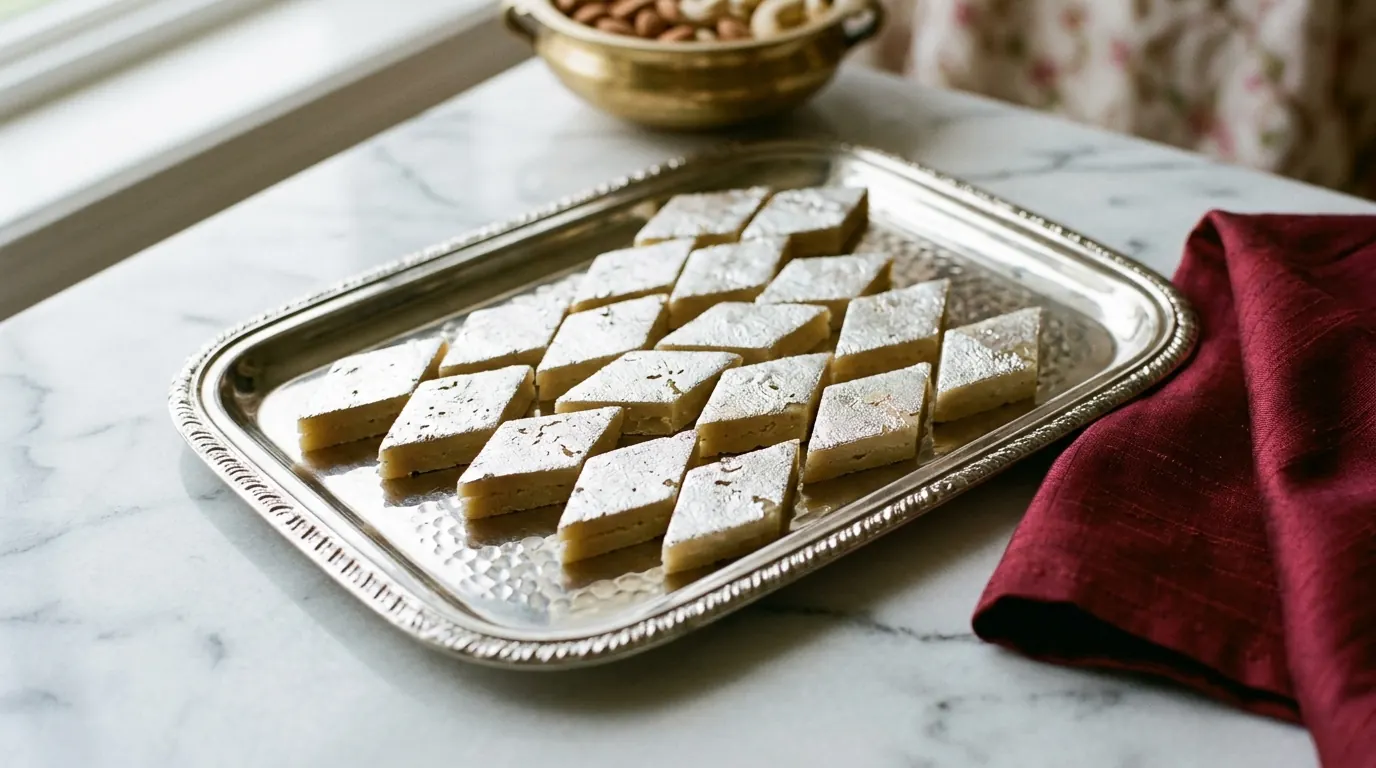
काजू कतली
Kaju katli in bulk for weddings and Diwali gifting
Kaju katli is the sweet that signals a bigger budget on the table, thin diamond-shaped pieces made almost entirely from cashews. It is often the first thing guests reach for in a mixed sweet box.
What makes a good kaju katli
Kaju katli is made by grinding cashews into a fine paste, cooking it with sugar syrup on a slow flame until it forms a smooth dough, then rolling it thin and cutting it into diamond shapes, sometimes finished with a light silver leaf on top. A good kaju katli should be smooth and slightly soft to bite, never grainy or oily, and it should taste of cashew first, not just sugar.
Where families order it
- Wedding sweet trays
- Diwali gift boxes
- Corporate hampers
- Engagement and ring ceremony
- Return gifts
How much kaju katli for your guests?
A rough planning figure for a menu with other dishes beside it. Baljeet sets the real amount once your menu is fixed.
Kitchen slip · Kaju Katli
| 50 guests | about 3 kg |
|---|---|
| 100 guests | about 6 kg |
| 250 guests | about 14 kg |
| 500 guests | about 25 kg |
Approximate, cooked weight or pieces, no safety margin.
Ordered for weddings and events in Panchkula, Chandigarh, Mohali, Zirakpur and Kharar. Planning the whole menu? Try the food quantity calculator.
How is kaju katli served at a wedding?
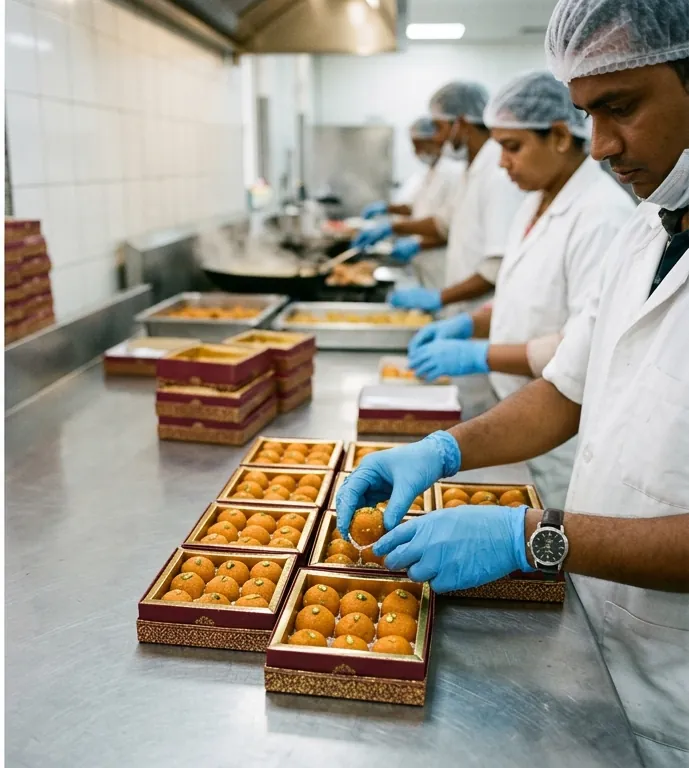
Kaju katli is served at room temperature, arranged in neat diamond-shaped pieces on the top layer of a mixed sweet tray so it is the first thing guests notice. In Diwali and corporate gift boxes it is placed in its own compartment, sometimes with the silver leaf facing up for presentation. At weddings, hosts typically order a smaller quantity of kaju katli compared to besan ladoo or motichoor ladoo, using it more for visual appeal on the tray than as the main bulk sweet.
Where does kaju katli come from?
Kaju katli is a relatively newer addition to Indian mithai compared to besan or khoya sweets, gaining popularity across North India from the mid-20th century as cashew became more widely available and affordable. It quickly became associated with premium gifting during Diwali and weddings because of its smooth texture, diamond shape and the silver leaf finish often added on top. In Punjabi households it is now seen as one of the more prestigious sweets to offer guests, often signalling a more generous sweet budget.
How it keeps
Stays fresh for about a week at room temperature in an airtight box; refrigeration extends this but the texture is best at room temperature.
Don’t worry, we will take care of you
Since kaju katli is a richer sweet, ordering a smaller quantity of it alongside a larger amount of besan ladoo or motichoor ladoo keeps the tray looking premium without a big cost jump.
Tell us your budget →Kaju Katli: what people ask
Why is kaju katli often more expensive than other sweets?
It is made almost entirely from cashews with very little else added, and cashew is a costlier ingredient than besan, wheat flour or khoya used in other sweets.
Is kaju katli good for gifting during Diwali?
Yes, it is one of the most popular gifting sweets during Diwali because of its premium look and smooth texture, and it also holds up well over a few days.
Is kaju katli suitable for Jain guests?
Yes, kaju katli is made from cashews, sugar and ghee with no onion, garlic or root vegetables, so it fits Jain requirements as it is.
How many pieces of kaju katli in 1 kg?
Roughly 30 to 35 diamond-shaped pieces make up a kg, depending on how thin and how large Baljeet cuts them for your order. He can confirm the exact count once you place your booking.
Does kaju katli need silver leaf on top?
No, the silver leaf, called vark, is optional and mainly decorative rather than essential to the sweet. Kaju katli tastes the same without it, so it can be left plain if you prefer a simpler look.
Goes well with
Don’t worry, we will take care of you
Tell us how many guests you have and how much you can spend. Baljeet plans a full, proper menu around that amount. He says plainly what it covers, with no hidden extras, whether it’s a 40-guest path at home or a 600-guest wedding.