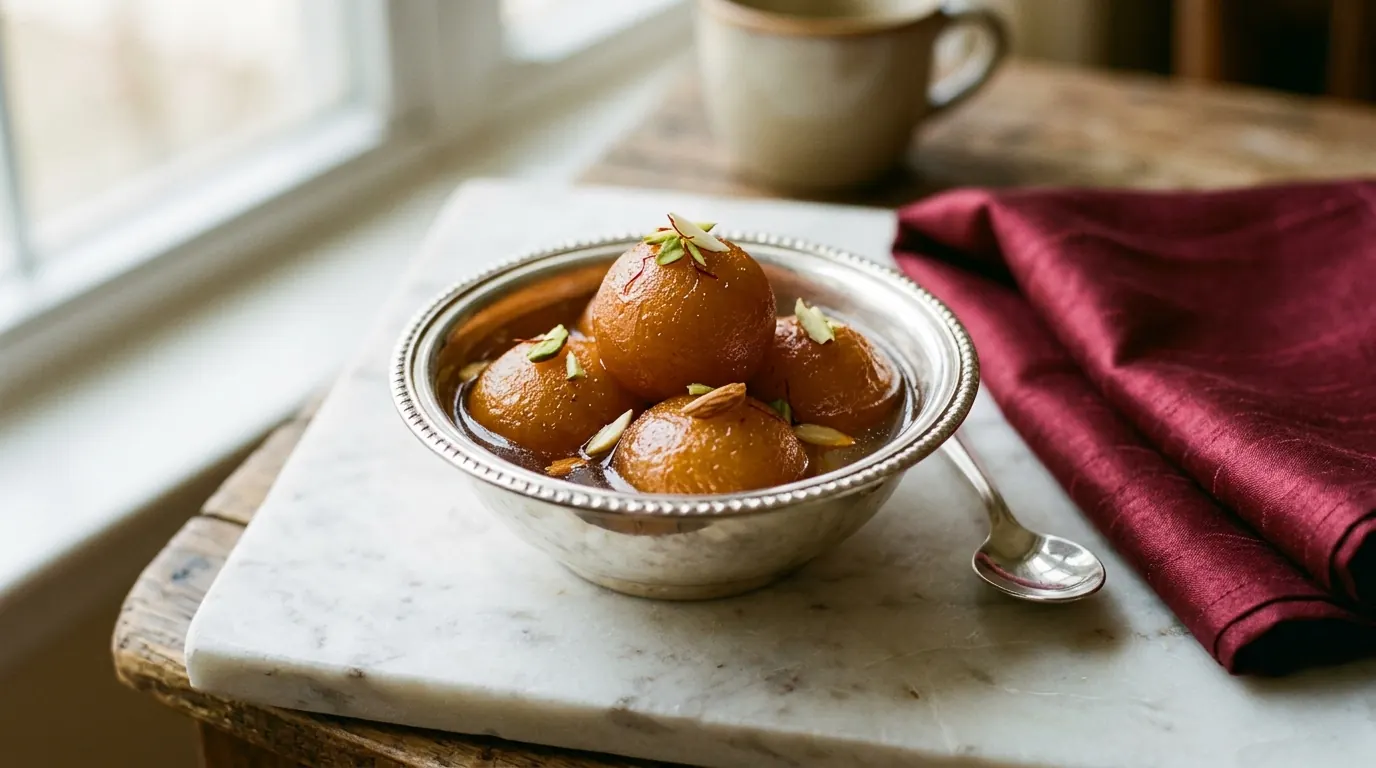
गुलाब जामुन
Gulab jamun in bulk for weddings and parties
Gulab jamun is the one sweet almost nobody says no to, which is why it disappears fastest at any function. Served warm, it is soft khoya dumplings soaked in a light cardamom syrup.
What makes a good gulab jamun
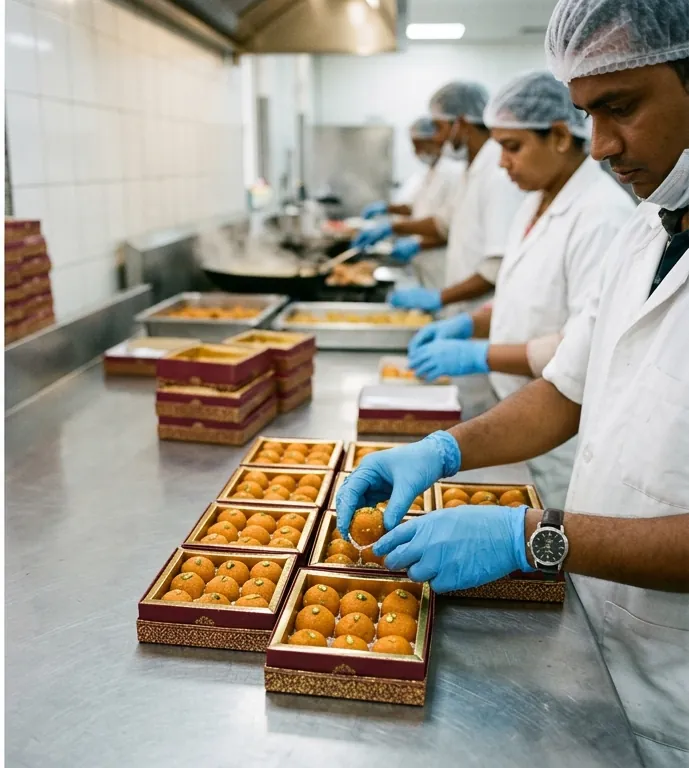
Gulab jamun is made by kneading khoya, a little flour and sometimes paneer into a soft dough, shaping it into smooth balls, deep frying them slowly on a low flame until evenly brown, then soaking them in warm sugar syrup flavoured with cardamom and sometimes rose water. A good gulab jamun should be soft all the way through with no hard or doughy centre, and the syrup should soak in without making it soggy or falling apart.
Where families order it
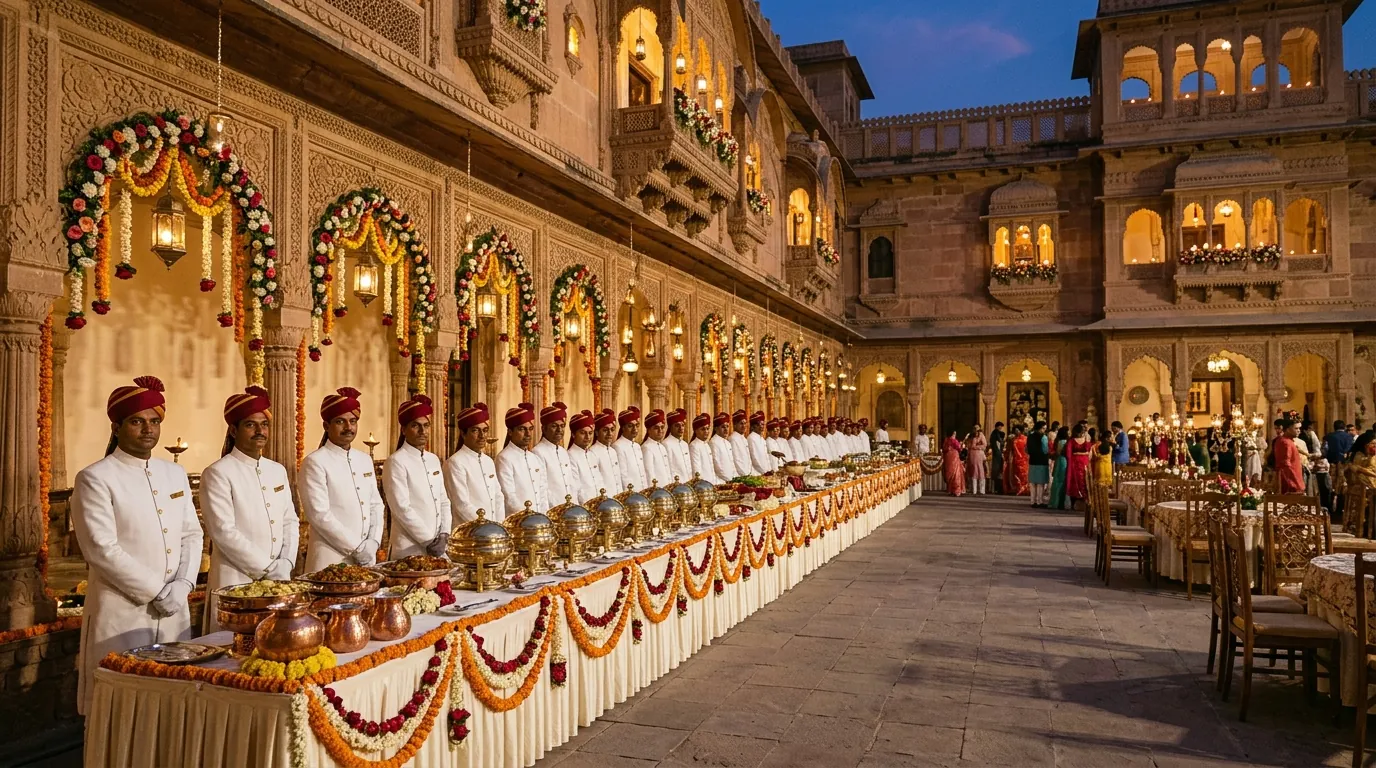
- Wedding dinner counters
- Birthday parties
- Office celebrations
- Festival gatherings
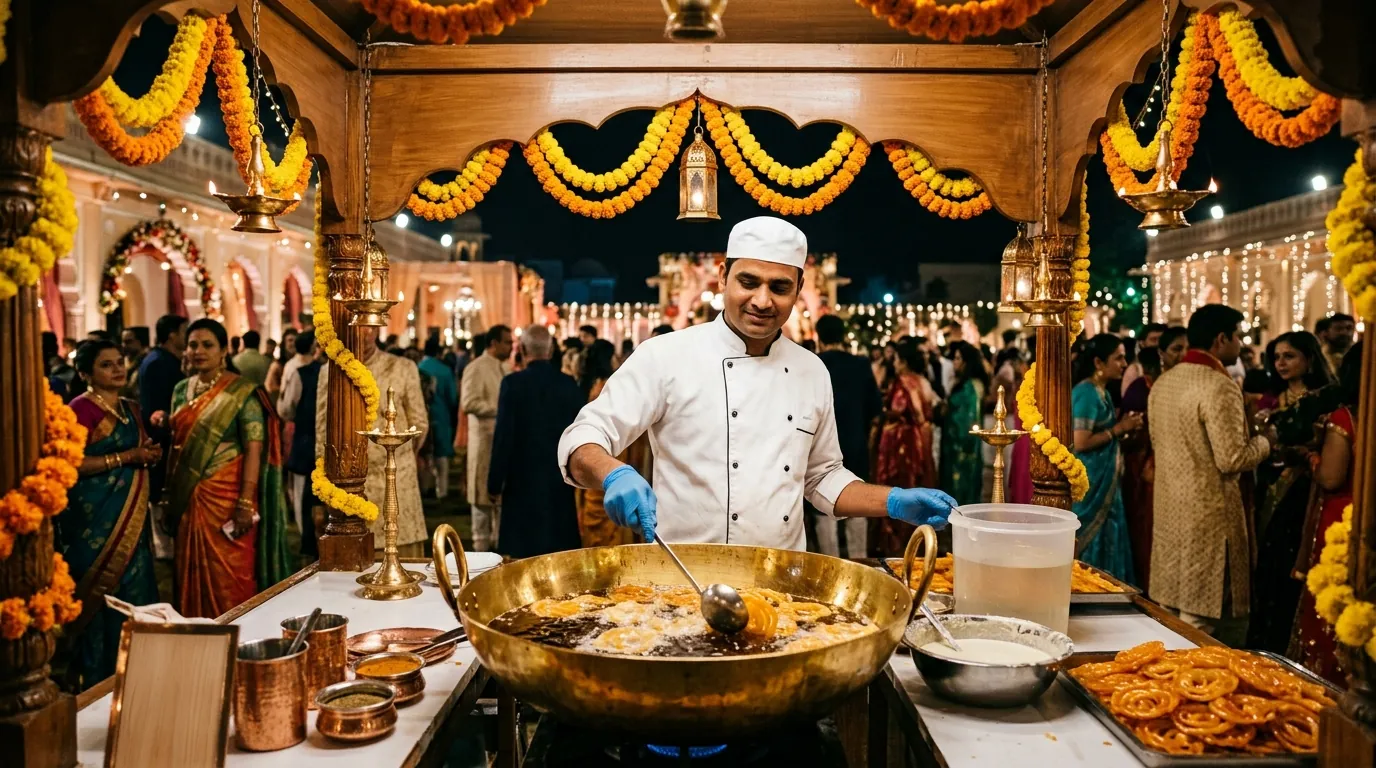
- Live jamun counter
How much gulab jamun for your guests?
A rough planning figure for a menu with other dishes beside it. Baljeet sets the real amount once your menu is fixed.
Kitchen slip · Gulab Jamun
| 50 guests | about 100 pieces |
|---|---|
| 100 guests | about 200 pieces |
| 250 guests | about 450 pieces |
| 500 guests | about 900 pieces |
Approximate, cooked weight or pieces, no safety margin.
Ordered for weddings and events in Panchkula, Chandigarh, Mohali, Zirakpur and Kharar. Planning the whole menu? Try the food quantity calculator.
How is gulab jamun served at a wedding?
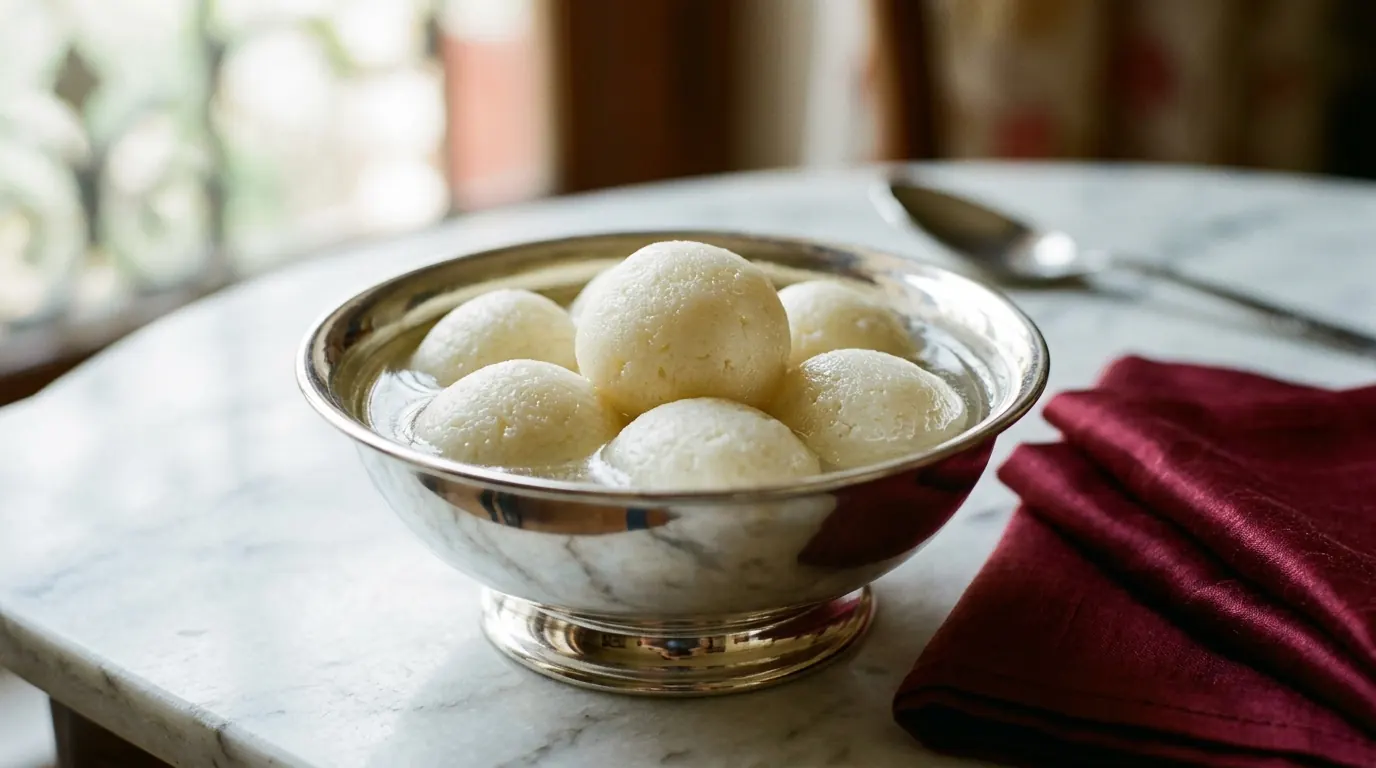
Gulab jamun is most often served warm at a live counter, ladled fresh from a syrup pot directly into small bowls for guests as they pass through the dinner buffet. At sit-down dinners it is served in individual katoris alongside other sweets. For parties and birthdays it can also be served chilled, especially in summer, though the traditional preference stays warm. Families usually pick gulab jamun alongside one lighter sweet like rasgulla so the dessert table has both a rich and a refreshing option.
Where does gulab jamun come from?
Gulab jamun has roots in Persian-influenced Mughal kitchens, where fried dough balls soaked in syrup were adapted using khoya once dairy became central to North Indian cooking. Over generations it became the single most common dessert at Punjabi and North Indian weddings, largely because it pleases almost every age group and works both hot and cold. Today it is considered a near-default sweet on any wedding or party menu, often the first item to run out at a live counter.
How it keeps
Best eaten fresh within 1-2 days; if refrigerated in the syrup, it stays good for about 4-5 days but tastes best gently warmed before serving.
Don’t worry, we will take care of you
Gulab jamun is filling on its own, so pairing it with just one lighter sweet like rasgulla, instead of three or four varieties, keeps both cost and wastage down.
Tell us your budget →Gulab Jamun: what people ask
How many gulab jamuns per person at a wedding?
About 2 pieces per guest is the usual planning number when it is served alongside other sweets. Baljeet confirms the exact amount for your menu and guest count.
Should gulab jamun be served hot or cold?
It is traditionally served warm, which brings out the ghee and cardamom better, though many guests also enjoy it chilled in summer.
Can gulab jamun be made egg-free and Jain-friendly?
Yes, gulab jamun is naturally egg-free and made from khoya and flour, so it fits Jain and pure vegetarian requirements without any changes.
Is gulab jamun served hot or cold at weddings?
It is traditionally served warm, straight from a live counter, since the heat brings out the ghee and cardamom flavour better. Some hosts also offer a chilled version in summer.
Should gulab jamun be served hot or cold?
It is traditionally served warm, straight from a live syrup counter, since the heat brings out the ghee and cardamom flavour better than cold. Some hosts also offer a chilled version in summer months.
Don’t worry, we will take care of you
Tell us how many guests you have and how much you can spend. Baljeet plans a full, proper menu around that amount. He says plainly what it covers, with no hidden extras, whether it’s a 40-guest path at home or a 600-guest wedding.