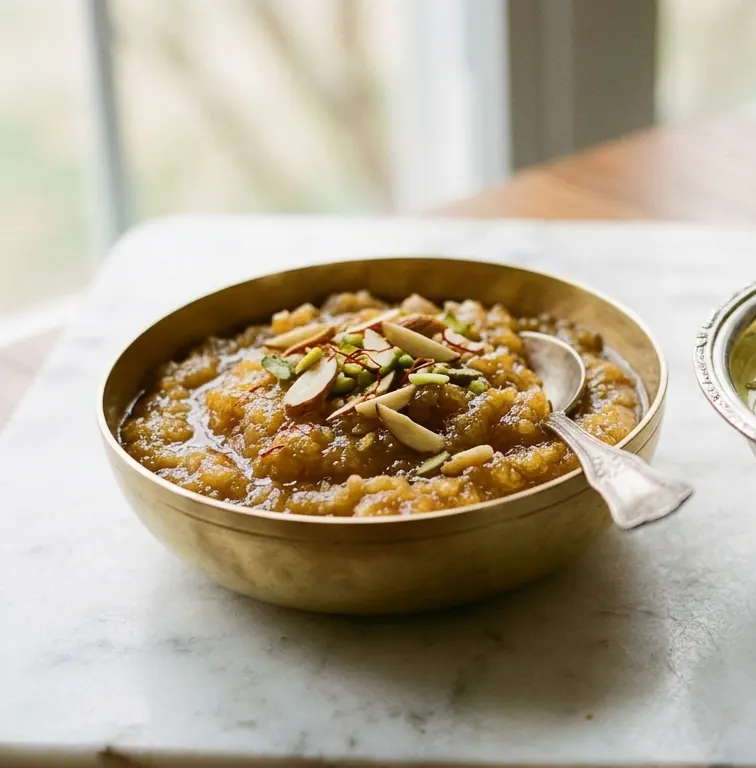
मूंग दाल का हलवा
Moong dal halwa in bulk for weddings and winter functions
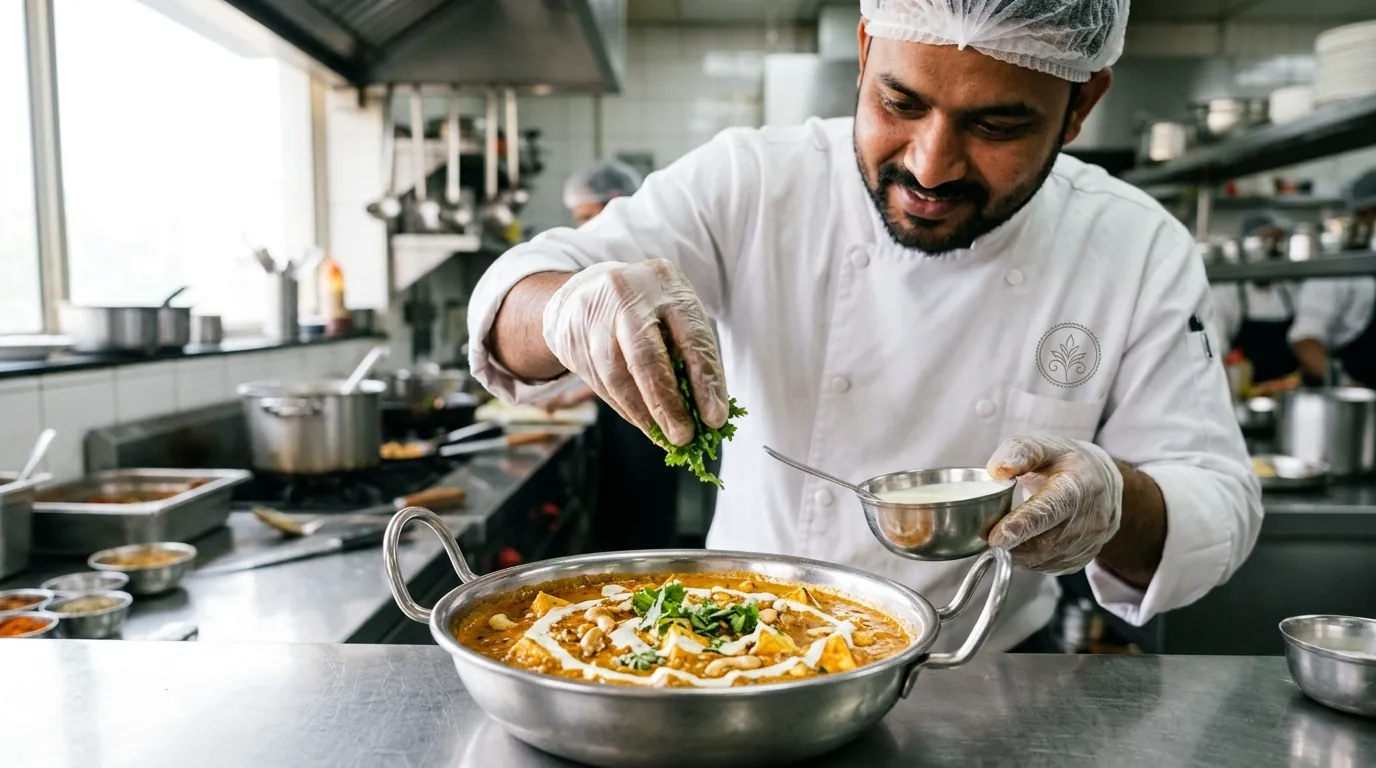
Moong dal halwa is the heavier, richer halwa that takes real time and ghee to get right, which is why it is usually kept for special occasions. It has a distinct nutty flavour from the roasted lentil.
What makes a good moong dal halwa
Moong dal halwa is made by soaking and grinding split yellow moong dal into a coarse paste, then roasting it in a generous amount of ghee on a slow flame for a long time until it turns golden, before adding sugar, milk and dry fruits. The long, patient roasting is what gives it its texture and flavour, rushing it leaves a raw dal taste behind. A good moong dal halwa should be grainy but soft, rich with ghee, and never taste undercooked or bitter.
Where families order it
- Winter wedding dinners
- Live dessert counters
- Festival and family functions
- Elders' celebration meals
How much moong dal halwa for your guests?
A rough planning figure for a menu with other dishes beside it. Baljeet sets the real amount once your menu is fixed.
Kitchen slip · Moong Dal Halwa
| 50 guests | about 4 kg |
|---|---|
| 100 guests | about 8 kg |
| 250 guests | about 18 kg |
| 500 guests | about 34 kg |
Approximate, cooked weight or pieces, no safety margin.
Ordered for weddings and events in Panchkula, Chandigarh, Mohali, Zirakpur and Kharar. Planning the whole menu? Try the food quantity calculator.
How is moong dal halwa served at a wedding?
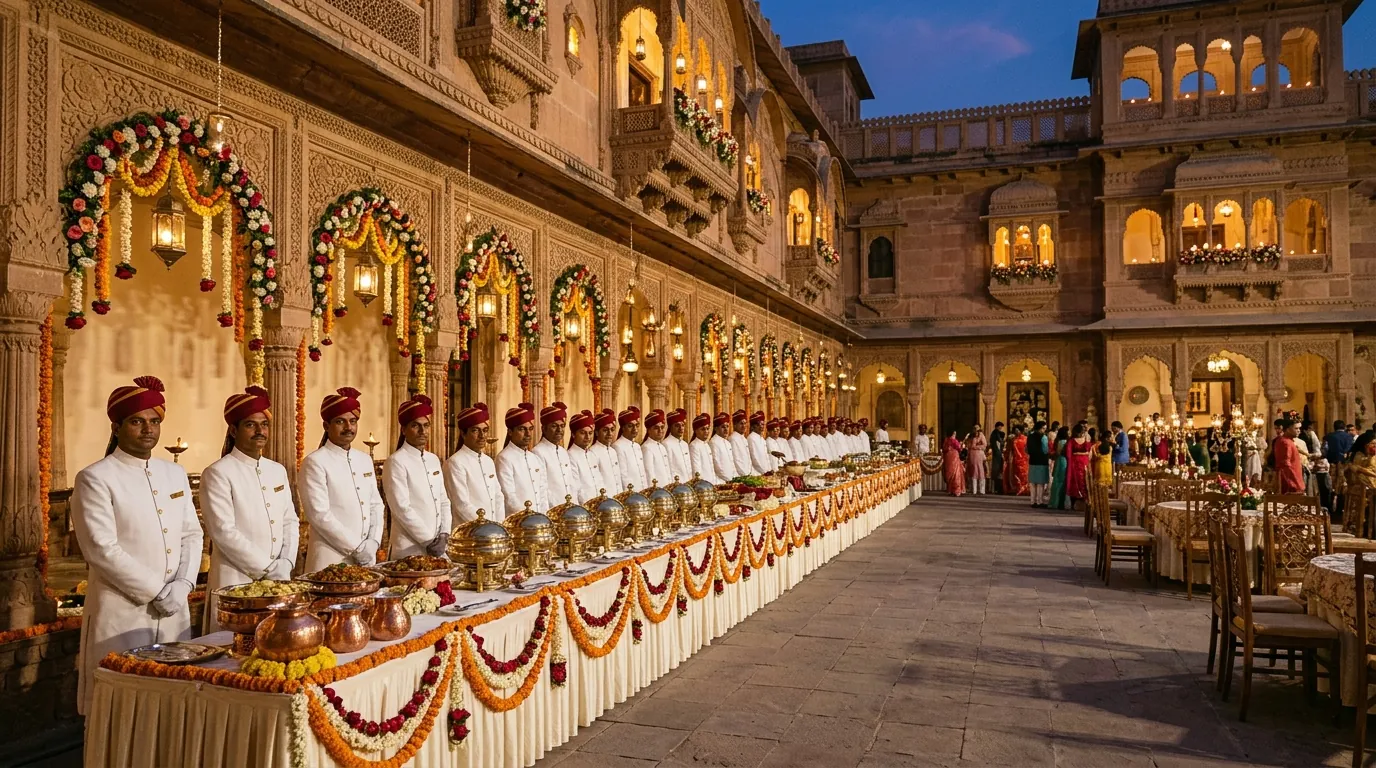
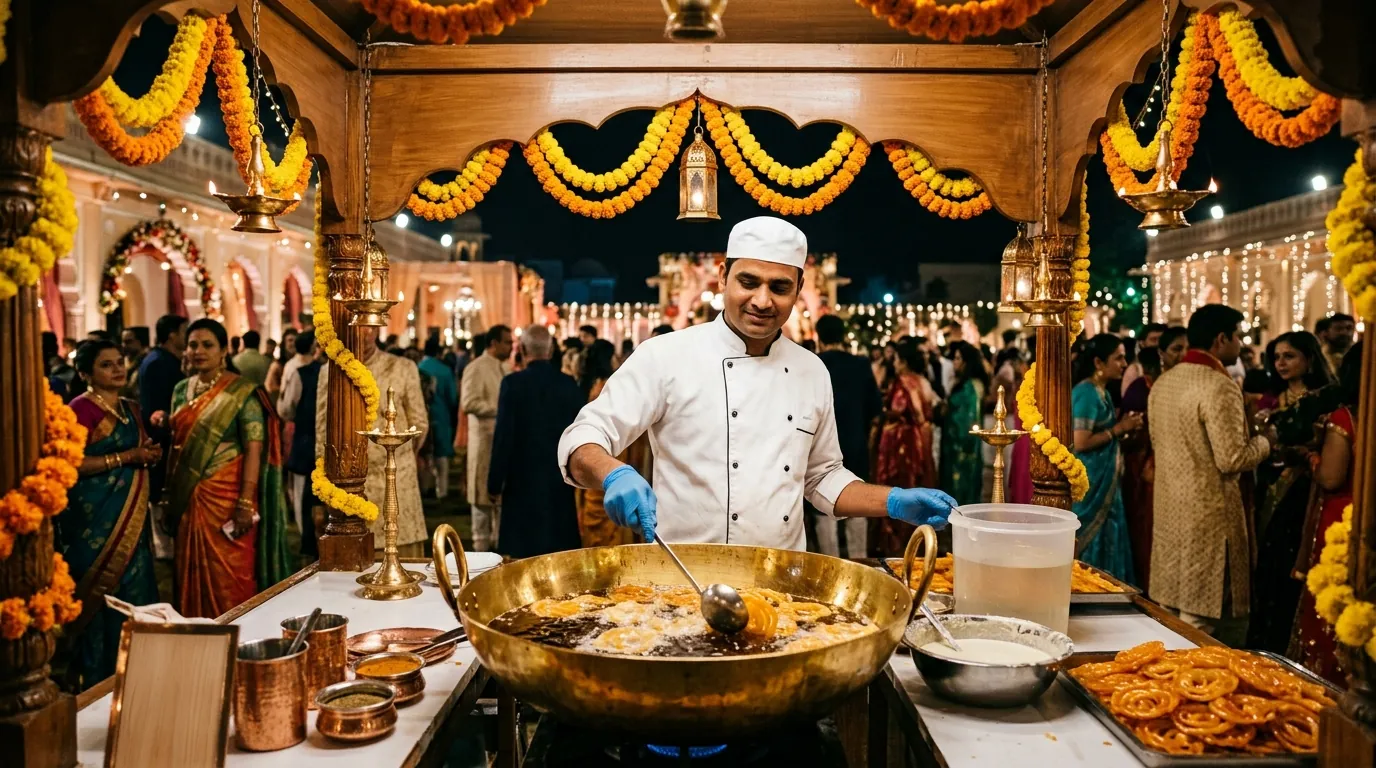
Moong dal halwa is served warm from a live counter, much like gajar halwa, ladled into small bowls so guests get it hot rather than reheated later. It typically appears at winter wedding dinners and festival functions alongside one or two other desserts rather than as the sole sweet. Because it is rich and heavy, portions served per guest are kept small. Families often request it specifically for elders' celebration meals, sometimes serving it separately from the general dessert counter as a mark of special attention.
Where does moong dal halwa come from?
Moong dal halwa developed in Punjab and Rajasthan as a richer, more labour-intensive alternative to simpler halwas, requiring hours of slow roasting in ghee that made it a dish reserved for special occasions rather than daily cooking. It is closely linked to winter weddings and celebration meals for elders, since the ghee content is seen as warming and nourishing. Because of the time and attention it demands, it has traditionally been viewed as a dish that shows extra effort and generosity from the host.
How it keeps
Keeps well for 3-4 days at room temperature and longer refrigerated, since the heavy ghee content helps it last better than milk-based halwas.
Don’t worry, we will take care of you
Because it is rich and heavy, a smaller serving per guest still feels satisfying, so it is worth checking portion size with Baljeet before scaling up the total quantity.
Tell us your budget →Moong Dal Halwa: what people ask
Why does moong dal halwa take longer to prepare than other sweets?
It needs slow, patient roasting in ghee to fully cook the dal and bring out its flavour, which naturally takes more time than sweets like barfi or ladoo.
Is moong dal halwa served hot or at room temperature?
It is best served warm, which is why it usually works well as a live counter item rather than being plated cold in advance.
How much moong dal halwa is needed for 250 guests?
About 18 kg is a sensible planning figure when it is one of two or three desserts on offer. Baljeet confirms the exact amount for your full menu.
Why is moong dal halwa considered a special-occasion sweet?
It takes hours of slow roasting in ghee to prepare properly, which makes it more time and labour intensive than most other sweets, so it is usually reserved for weddings and important functions.
How much moong dal halwa per guest is normal?
A small serving, around 70 to 80 grams per guest, is typical since the halwa is rich, heavy and quite filling. Baljeet can guide on exact planning once he knows your full dessert counter details.
Don’t worry, we will take care of you
Tell us how many guests you have and how much you can spend. Baljeet plans a full, proper menu around that amount. He says plainly what it covers, with no hidden extras, whether it’s a 40-guest path at home or a 600-guest wedding.